

Common Rivet Failures and How to Prevent Them
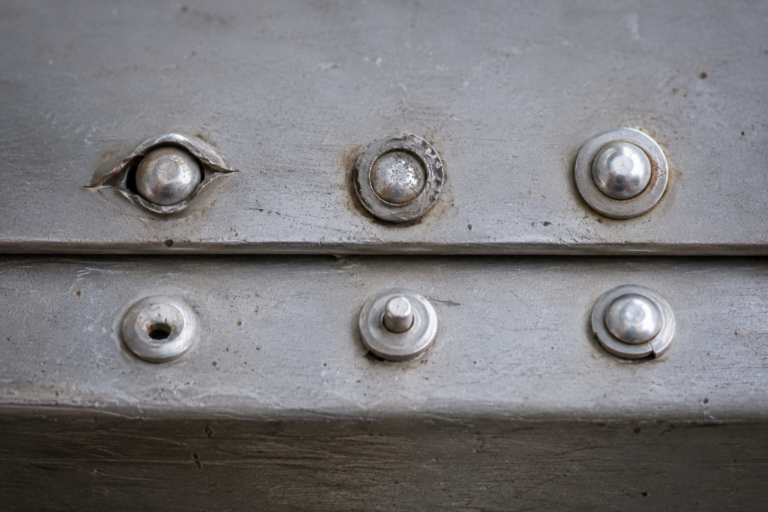
Blind rivets are widely used in construction, transportation, HVAC, manufacturing, marine, and industrial applications because they provide a fast, reliable, and cost-effective method of joining materials.
However, like any fastening system, rivets can fail if they are incorrectly selected, improperly installed, or exposed to conditions beyond their design limits.
Understanding the most common rivet failures and how to prevent them can significantly improve joint performance, reduce maintenance costs, and extend the service life of equipment and structures.
Why Do Rivets Fail?
Most rivet failures can be traced back to one or more of the following factors:
- Incorrect rivet selection
- Improper installation
- Excessive loading
- Vibration and fatigue
- Corrosion
- Environmental exposure
By understanding the causes, engineers and installers can select the most appropriate fastening solution for their application.
1. Rivet Pull-Through Failure
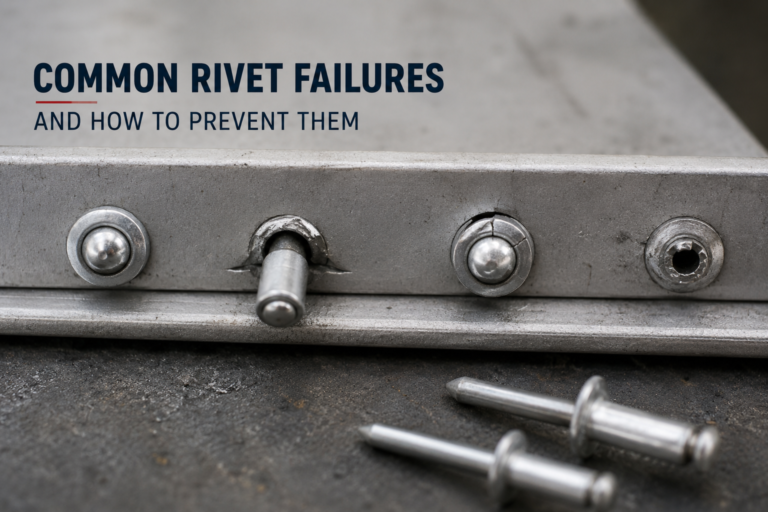
What Is It?
Pull-through occurs when the rivet head pulls through one of the materials being joined.
This is common when fastening thin or soft materials such as:
- Aluminium sheet
- Plastic panels
- Composite materials
- Fibreglass
Causes
- Rivet diameter too small
- Standard head used instead of large flange head
- Material too thin
- Excessive load applied to the joint
Prevention
- Use larger diameter rivets
- Select large flange rivets for soft materials
- Increase material thickness where possible
- Distribute loads across multiple fasteners
2. Shear Failure
What Is It?
Shear failure occurs when the rivet shank breaks due to forces acting across the joint.
This typically occurs in structural or load-bearing applications.
Causes
- Rivet strength too low
- Excessive loading
- Incorrect rivet type selected
Prevention
- Select rivets with adequate shear strength
- Use structural blind rivets where required
- Increase rivet diameter
- Increase the number of rivets in the joint
3. Tensile Failure
What Is It?
Tensile failure occurs when forces pull the joined materials apart, causing the rivet to stretch or break.
Causes
- Insufficient rivet tensile strength
- Incorrect rivet selection
- Excessive loading
Prevention
- Review design loads before selecting fasteners
- Use larger diameter rivets
- Consider structural rivets or lockbolt systems for high-load applications
4. Fatigue Failure
What Is It?
Fatigue failure develops over time due to repeated cyclic loading and vibration.
Even relatively small loads can eventually cause cracking and failure if repeated frequently.
Common Applications
- Trucks
- Trailers
- Railway equipment
- Agricultural machinery
- Mining equipment
Causes
- Constant vibration
- Dynamic loading
- Poor joint design
Prevention
- Use structural blind rivets or lockbolts
- Minimise joint movement
- Ensure proper clamp force
- Use fastening systems designed for vibration resistance
5. Rivet Head Separation
What Is It?
The rivet head separates from the body after installation.
Causes
- Poor-quality rivets
- Manufacturing defects
- Excessive loading
- Incorrect installation
Prevention
- Use quality-certified rivets
- Purchase from reputable suppliers
- Ensure installation tools are properly maintained
6. Loose Rivets
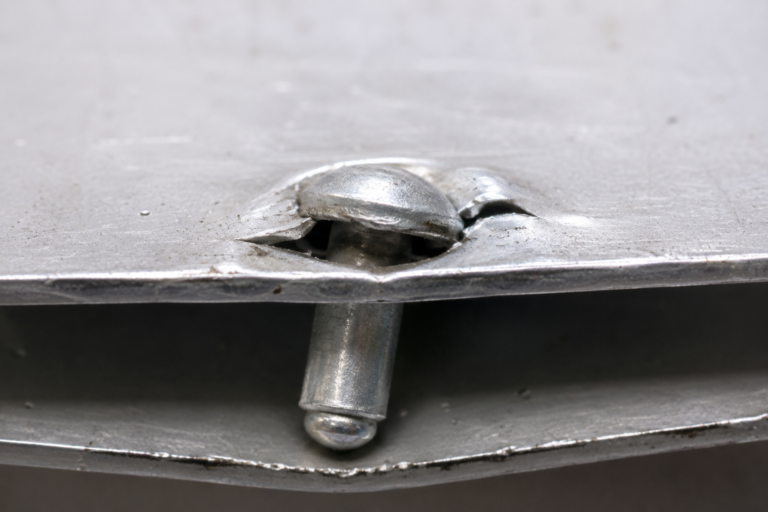
What Is It?
The rivet remains in place but no longer provides adequate clamping force.
Causes
- Incorrect grip range selection
- Hole size too large
- Joint movement
- Poor installation technique
Prevention
- Select the correct grip range
- Follow recommended hole sizes
- Use proper installation equipment
- Inspect joints regularly
7. Corrosion Failure
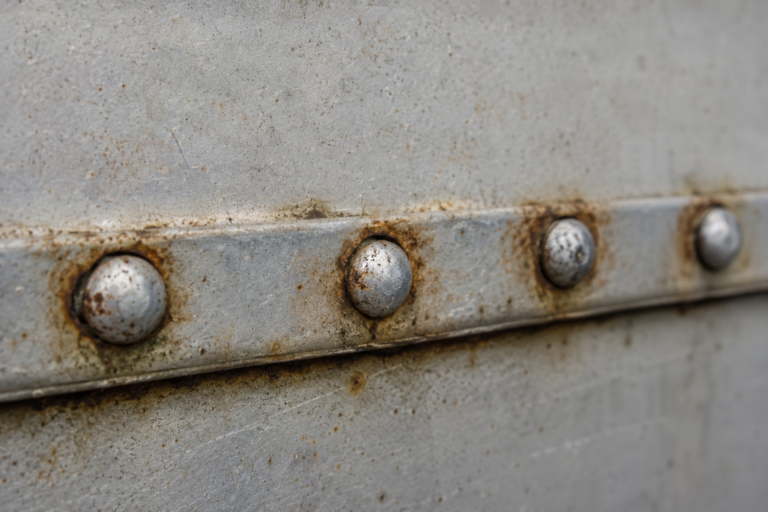
What Is It?
Corrosion gradually weakens the rivet and surrounding materials until failure occurs.
Common Environments
- Coastal areas
- Marine applications
- Chemical processing facilities
- Outdoor structures
Causes
- Incorrect material selection
- Salt exposure
- Galvanic corrosion between dissimilar metals
Prevention
- Use stainless steel rivets in corrosive environments
- Consider 316 stainless steel for marine applications
- Match rivet materials with parent materials where possible
- Use protective coatings when required
8. Water Ingress and Joint Leakage
What Is It?
Moisture enters through the rivet body or installation hole.
Common Applications
- Truck bodies
- HVAC equipment
- Electrical enclosures
- Marine equipment
Causes
- Standard open-end rivets used in sealed applications
- Poor installation
- Damaged rivets
Prevention
- Use closed-end blind rivets
- Apply sealants where necessary
- Ensure proper installation procedures
9. Incorrect Grip Range Selection
What Is It?
The rivet is too short or too long for the material thickness being joined.
Symptoms
- Poor clamp force
- Loose joints
- Premature failure
Prevention
Calculate the total material thickness before selecting the rivet.
Example:
- Sheet 1: 2.0 mm
- Sheet 2: 3.0 mm
Total grip thickness = 5.0 mm
Select a rivet whose grip range includes 5.0 mm.
10. Installation Tool Problems
What Is It?
The rivet is too short or too long for the material thickness being joined.
Symptoms
- Poor clamp force
- Loose joints
- Premature failure
Prevention
Calculate the total material thickness before selecting the rivet.
Example:
- Sheet 1: 2.0 mm
- Sheet 2: 3.0 mm
Total grip thickness = 5.0 mm
Select a rivet whose grip range includes 5.0 mm.
Best Practices for Reliable Riveted Joints
To maximise rivet performance:
- ✔ Select the correct rivet diameter
- ✔ Choose the correct grip range
- ✔ Consider environmental conditions
- ✔ Match rivet materials to the application
- ✔ Use structural rivets for high-load applications
- ✔ Use closed-end rivets where sealing is required
- ✔ Maintain installation tools properly
- ✔ Inspect critical joints regularly
Frequently Asked Questions
What is the most common cause of rivet failure?
The most common causes of rivet failure include incorrect rivet selection, improper installation, excessive loading, vibration, corrosion, and choosing the wrong grip range. Selecting the right rivet for the application and following proper installation procedures can significantly reduce the risk of failure.
How can rivet failures be prevented?
Most rivet failures can be prevented by choosing the correct rivet type, diameter, and grip range for the application. Proper installation techniques, regular tool maintenance, and selecting materials suitable for the operating environment also help improve joint strength and reliability.
When should structural blind rivets be used?
Structural blind rivets are recommended for applications exposed to heavy loads, continuous vibration, or dynamic forces. They provide greater shear strength and clamp force than standard blind rivets, making them ideal for transport, construction, mining, and heavy manufacturing.
Why do rivets become loose over time?
Rivets may become loose due to an incorrect grip range, oversized holes, poor installation, or repeated vibration. Using the correct rivet specifications and ensuring proper installation helps maintain a secure and long-lasting joint.
Which rivet material is best for corrosive environments?
Stainless steel rivets, particularly 316 stainless steel, are the preferred choice for marine, coastal, and other corrosive environments. Matching the rivet material to the parent material also helps minimise galvanic corrosion and extends the life of the joint.
Need Help Selecting the Right Rivet?
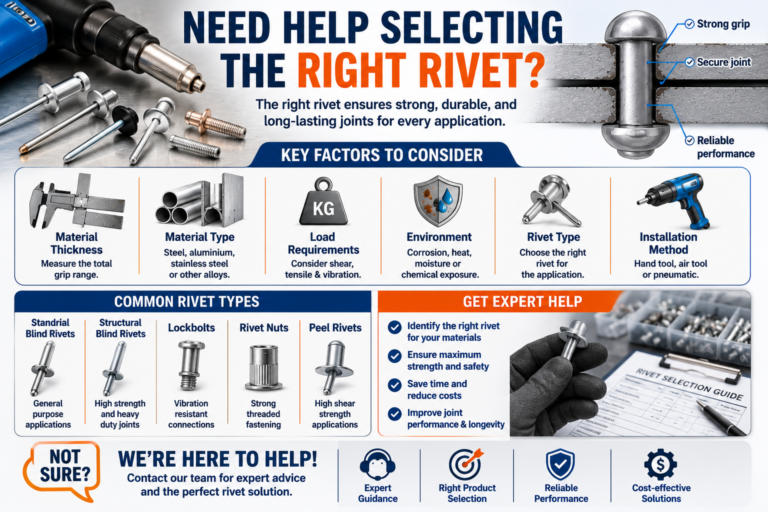
Choosing the correct blind rivet can significantly improve joint strength, durability, corrosion resistance, and long-term reliability.
Top Fasteners supplies a comprehensive range of blind rivets, structural blind rivets, closed-end rivets, stainless steel rivets, multi-grip rivets, lockbolts, and high-strength lockbolts for a wide range of industrial applications.
Our experienced team can assist with selecting the most suitable fastening solution for construction, transport, HVAC, manufacturing, marine, and industrial applications.
Contact Top Fasteners today for expert advice and a competitive quotation on your fastening requirements.