Top Fasteners | Fastening Solutions Provider

Blogs

When and Why to Use Duo-Lock Structural Blind Rivets Instead of Standard Blind Rivets

Home When and Why to Use Duo-Lock Structural Blind Rivets Instead of Standard Blind Rivets In many industrial applications, a standard blind rivet simply isn’t strong enough. When a joint is subjected to heavy loads, vibration, impact or fatigue, a structural blind rivet provides a much stronger and more reliable fastening solution. Top Fasteners’ Duo-Lock Structural Blind Rivets are designed for demanding applications where high shear strength, high tensile strength and secure mandrel retention are essential. They are a direct equivalent to Hemlok™ and Orlock™ structural blind rivets, making them an excellent alternative for manufacturers and maintenance teams looking for
Read More »
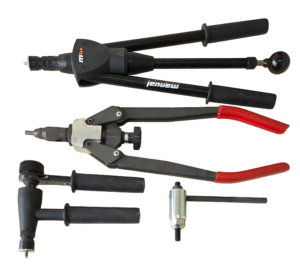
Manual rivet nut tools for installing rivet nuts in industrial applications

When and Why It Is Better to Use Rivnuts (Nutserts) Instead of Other Fastening Methods

When and Why It Is Better to Use Rivnuts (Nutserts) Instead of Other Fastening Methods Selecting the correct fastening method is just as important as choosing the right fastener. In many applications, conventional nuts and bolts, welding, self-tapping screws, or threaded holes may not be practical or cost-effective. This is where rivnuts, also known as nutserts or blind threaded inserts, provide a versatile and reliable solution. Rivnuts create a permanent internal thread in thin materials, allowing components to be securely fastened even when access is only available from one side. What Is a Rivnut (Nutsert)? A rivnut is a tubular

Read More »
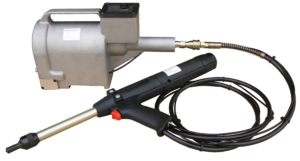
SRT456 lockbolt installation tool for industrial fastening applications

When Should You Use Speed Rivets Instead of Standard Blind Rivets?

When Should You Use Speed Rivets Instead of Standard Blind Rivets? In modern manufacturing and assembly, production speed is often just as important asproduct quality. Every second saved during installation can reduce labour costs and improveproductivity.While standard blind rivets remain one of the most popular fastening solutions, speed rivetsare designed specifically for applications where rapid installation and high-volumeproduction are priorities.Understanding when to use speed rivets can help manufacturers improve efficiency withoutcompromising joint reliability. What Is a Speed Rivet? A speed rivet is a type of blind rivet designed for fast, repeatable installation.Unlike many conventional blind rivets, speed rivets are engineered

Read More »
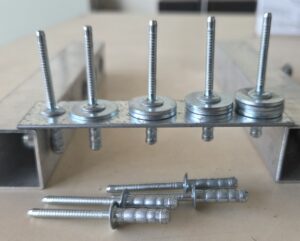
Metal fastening components arranged on a steel support channel before installation.

When and Why Multigrip Blind Rivets Are Better Than Standard Blind Rivets

When and Why Multigrip Blind Rivets Are Better Than Standard Blind Rivets Choosing the right blind rivet can make a significant difference to the strength, appearance,and efficiency of an assembly. While standard blind rivets remain the most commonly usedfastening solution, multigrip blind rivets offer several advantages in applications wherematerial thickness varies or inventory needs to be simplified.Understanding the differences between these two types of rivets helps manufacturers,maintenance teams, fabricators, and installers select the most suitable fastening solution. What Is a Standard Blind Rivet? A standard blind rivet is designed to clamp materials within a specific grip range. Every rivetsize has

Read More »
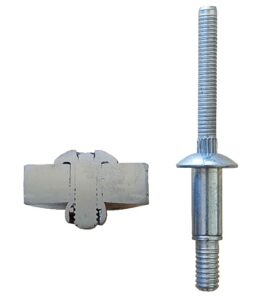
Close-up of an industrial blind rivet and metal installation tool components on a white background.

Structural Blind Rivets Explained: Strength, Reliability, and Ease of Installation

Structural Blind Rivets Explained: Strength, Reliability, and Ease of Installation Structural blind rivets are high-strength mechanical fasteners designed for applications where only one side of the materials being joined is accessible. Compared with standard open-end blind rivets, structural blind rivets are designed to provide greater shear and tensile strength, making them suitable for demanding industrial and load-bearing applications. Their combination of high joint strength, one-sided installation and resistance to vibration makes them suitable for transport equipment, construction, HVAC systems, heavy machinery and metal fabrication. What Are Structural Blind Rivets? Structural blind rivets are permanent mechanical fasteners designed to create strong

Read More »
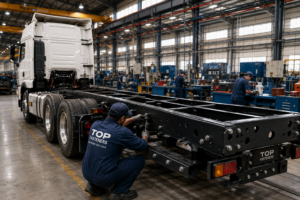
Truck chassis being assembled with heavy-duty fasteners in a commercial vehicle manufacturing facility

Truck and Trailer Fasteners: Choosing the Right Fastening Solution for Strength, Reliability & Long-Term Performance

Truck and Trailer Fasteners: Choosing the Right Fastening Solution for Strength, Reliability & Long-Term Performance Every truck and trailer is only as reliable as the fasteners holding it together. Whether you’re manufacturing semi-trailers, tipper bodies, refrigerated transport units, curtain-sided trailers, utility vehicles, or heavy-duty truck chassis, selecting the right fastening system is essential for safety, durability, and long-term performance. Commercial vehicles operate in demanding environments where fasteners are constantly exposed to heavy loads, road shock, vibration, moisture, corrosion, and changing temperatures. Using the wrong fastener can lead to joint failure, structural damage, costly repairs, and unnecessary vehicle downtime. Choosing the

Read More »
Common blind rivet failures in sheet metal joints

Common Rivet Failures and How to Prevent Them

Common Rivet Failures and How to Prevent Them Blind rivets are widely used in construction, transportation, HVAC, manufacturing, marine, and industrial applications because they provide a fast, reliable, and cost-effective method of joining materials. However, like any fastening system, rivets can fail if they are incorrectly selected, improperly installed, or exposed to conditions beyond their design limits. Understanding the most common rivet failures and how to prevent them can significantly improve joint performance, reduce maintenance costs, and extend the service life of equipment and structures. Why Do Rivets Fail? Most rivet failures can be traced back to one or more

Read More »
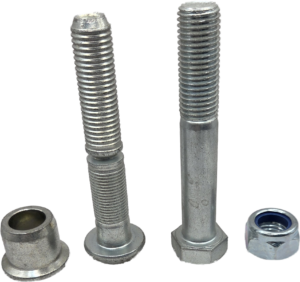
Lockbolt pin and collar compared with a conventional bolt and nut for industrial fastening applications.

Lockbolts vs Conventional Bolts: Which Fastening System Is Right for Your Application?

Lockbolts vs Conventional Bolts: Which Fastening System Is Right for Your Application? When comparing lockbolts vs conventional bolts, choosing the right fastening system can significantly impact equipment reliability, maintenance costs, and long-term performance. Both fastening methods provide strong mechanical connections, but they differ in installation speed, vibration resistance, clamp force retention, maintenance requirements, and service life. For industries such as transport, mining, construction, manufacturing, and heavy engineering, selecting the correct fastening solution can reduce downtime, improve safety, and lower operating costs. This guide explains the key differences between lockbolts and conventional bolts to help determine which fastening system is best

Read More »
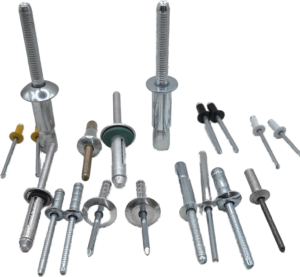
Selection of industrial blind rivets used in manufacturing and construction applications.

How to Select the Right Blind Rivet

How to Select the Right Blind Rivet Choosing the right blind rivet is essential for achieving a strong, reliable, and long-lasting fastening solution. Blind rivets are widely used in construction, transport, HVAC, manufacturing, marine, and general engineering applications because they can be installed when access is only available from one side of the material. Selecting the correct blind rivet helps ensure optimum strength, durability, corrosion resistance, and long-term performance. This guide explains the key factors to consider when choosing the right blind rivet for your application. What Is a Blind Rivet? A blind rivet consists of two components: The rivet

Read More »
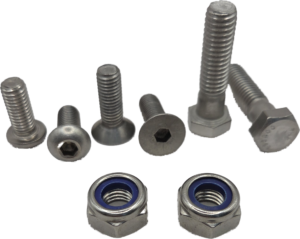
Stainless steel conventional bolts and nyloc nuts used in industrial fastening applications.

304 vs 316 Stainless Steel Fasteners – Which Should You Choose?

304 vs 316 Stainless Steel Fasteners – Which Should You Choose? When selecting stainless steel fasteners for your project, one of the most common questions is whether to choose 304 stainless steel or 316 stainless steel. Both materials offer excellent corrosion resistance and durability, but each is suited to different environments and applications. Understanding the differences between these two grades can help you choose the right fastener for long-term performance and value. What Are 304 Stainless Steel Fasteners? 304 stainless steel, also known as A2 stainless steel, is the most widely used grade of stainless steel fastener. It offers a

Read More »