

Structural Blind Rivets Explained: Strength, Reliability, and Ease of Installation
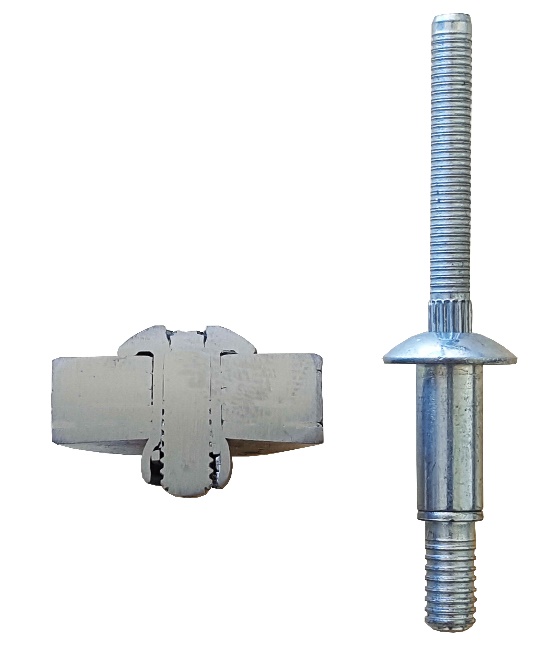
Structural blind rivets are high-strength mechanical fasteners designed for applications where only one side of the materials being joined is accessible. Compared with standard open-end blind rivets, structural blind rivets are designed to provide greater shear and tensile strength, making them suitable for demanding industrial and load-bearing applications.
Their combination of high joint strength, one-sided installation and resistance to vibration makes them suitable for transport equipment, construction, HVAC systems, heavy machinery and metal fabrication.
What Are Structural Blind Rivets?
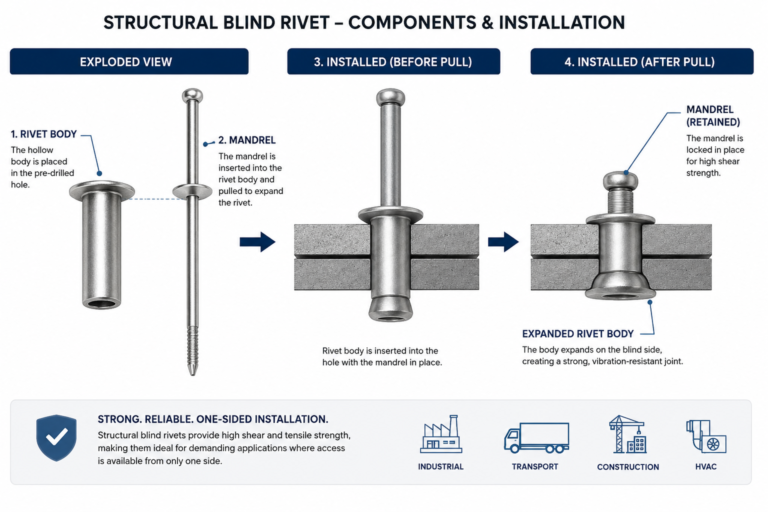
Structural blind rivets are permanent mechanical fasteners designed to create strong and reliable joints when access is available from only one side of an assembly.
Like standard blind rivets, they can be installed without requiring access to the rear of the workpiece. However, structural blind rivets are designed for applications requiring higher shear strength, tensile strength and resistance to vibration or dynamic loading.
Many structural blind rivet systems use a retained or mechanically locked mandrel that contributes to the strength and integrity of the installed joint. Depending on the rivet design, this can provide improved load distribution and joint performance compared with standard open-end blind rivets.
Structural blind rivets are commonly used in truck and trailer manufacturing, transport equipment, construction, HVAC systems, mining equipment, agricultural machinery and industrial metal fabrication.
How Do Structural Blind Rivets Work?
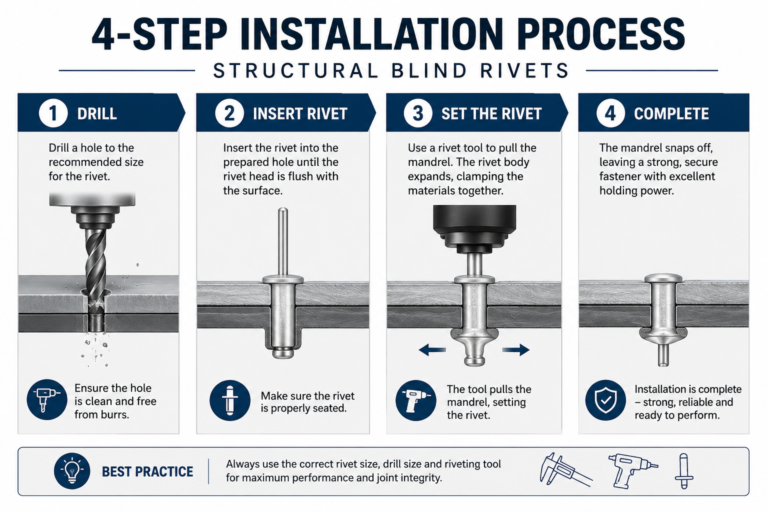
A structural blind rivet generally consists of two main components:
- A rivet body
- A mandrel or stem
During installation, the rivet is inserted into a prepared hole through the materials being joined. A compatible rivet installation tool grips and pulls the mandrel while supporting the rivet head.
As the mandrel is pulled, the blind end of the rivet body expands or forms behind the rear material. This creates a clamping action that pulls the materials together and forms a permanent mechanical joint.
Many structural blind rivets use a mechanically retained or locked mandrel. Once the rivet has been fully set, the mandrel breaks at a controlled point while the retained section remains secured within the rivet body.
The retained mandrel contributes to the strength and integrity of the installed fastener. The resulting joint is designed to withstand higher loads, vibration and demanding service conditions when the correct rivet is selected and installed according to the manufacturer’s recommendations.
Key Features of Structural Blind Rivets
High Shear and Tensile Strength
Structural blind rivets are designed to provide higher shear and tensile strength than standard open-end blind rivets.
Shear strength refers to the rivet’s ability to resist forces acting across the joint, while tensile strength refers to its ability to resist forces pulling the joined materials apart.
This makes structural blind rivets suitable for demanding assemblies where the fastener may be exposed to higher loads or dynamic operating conditions.
Retained or Mechanically Locked Mandrel
Many structural blind rivet systems use a retained or mechanically locked mandrel.
The retained portion of the mandrel contributes to the strength and integrity of the installed rivet and helps maintain joint performance under vibration and dynamic loading.
Mandrel retention methods vary between rivet designs, so product specifications should be reviewed when selecting a rivet for a particular application.
One-Sided Installation
Structural blind rivets require access to only one side of the materials being joined.
This makes them suitable for enclosed sections, box frames, hollow structures, vehicle body panels and other assemblies where the rear of the joint is difficult or impossible to access.
One-sided installation can also simplify assembly and reduce the need to reposition large components during production.
Resistance to Vibration
Structural blind rivets are designed to maintain joint integrity in applications exposed to vibration, movement and dynamic loading.
This makes them suitable for transport equipment, heavy machinery, agricultural equipment and other applications where fastened joints may experience repeated movement during operation.
Actual joint performance depends on the selected rivet, joint design, application materials, installation quality and operating conditions.
Fast and Efficient Installation
Structural blind rivets can be installed using compatible pneumatic, battery-powered or hydraulic rivet tools.
The installation process is generally fast and repeatable, helping reduce assembly time and improve production efficiency. The appropriate tool and nose assembly depend on the selected rivet system, rivet diameter and application requirements.
Common Structural Blind Rivet Systems
Structural blind rivets are available in different designs, materials, head styles, diameters and performance configurations.
Common proprietary structural blind rivet systems include Magna-Lok®, Monobolt®, Hemlok®, Super-Riv® and Duo-Lock®. Each system is designed with specific performance characteristics and installation requirements.
Depending on the product, differences may include:
- Rivet body design
- Mandrel retention method
- Shear and tensile strength
- Grip range
- Rivet diameter
- Head style
- Rivet body and mandrel materials
- Hole-fill capability
- Blind-side formation
- Installation tool requirements
Product availability and specifications vary between manufacturers and rivet systems. The selected rivet should be suitable for the application materials, joint thickness, hole size, load requirements and operating environment.
Structural Blind Rivets vs Standard Blind Rivets
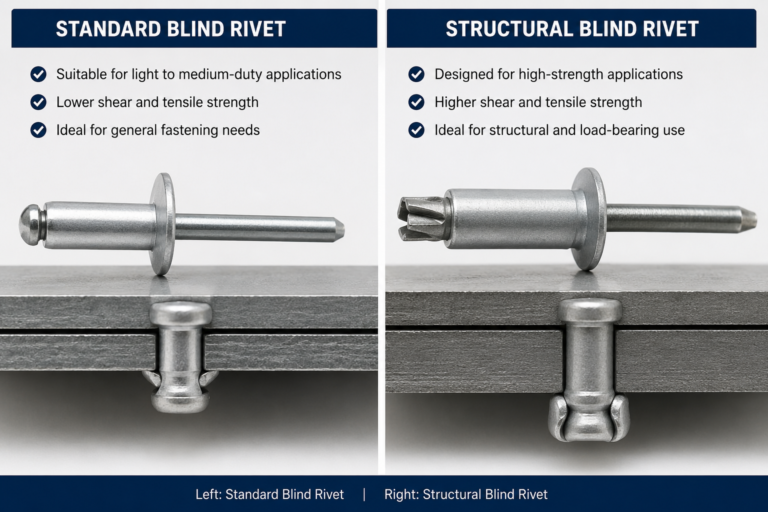
Both standard blind rivets and structural blind rivets provide one-sided installation. However, they are designed for different load requirements and operating conditions.
| Feature | Standard Blind Rivet | Structural Blind Rivet |
|---|---|---|
| Strength | Suitable for light- to medium-duty fastening | Designed for higher shear and tensile loads |
| Mandrel retention | Varies according to rivet design | Commonly uses a retained or mechanically locked mandrel |
| Vibration resistance | Depends on rivet design and joint conditions | Designed for demanding vibration and dynamic loading conditions |
| Typical load requirements | Light to medium | Medium to heavy |
| Structural applications | Limited and dependent on rivet specifications | Designed for demanding structural applications |
| Installation access | One-sided access | One-sided access |
| Installation equipment | Standard blind rivet tool | Compatible structural rivet installation tool |
Standard blind rivets are commonly used for general sheet metal fabrication, light enclosures, signs and other applications where moderate fastening strength is sufficient.
Structural blind rivets are generally selected when higher load capacity, improved joint integrity or greater resistance to vibration is required.
The appropriate fastener should be selected according to the application requirements and the manufacturer’s published technical data.
Common Applications of Structural Blind Rivets

Truck and Trailer Manufacturing
Structural blind rivets are commonly used in truck body and trailer assemblies where high joint strength and resistance to vibration are important.
Applications may include:
- Side panels
- Roof structures
- Floor assemblies
- Tailgate systems
- Body frames
- Internal partitions
- Equipment enclosures
- Vehicle body components
The ability to install the rivet from one side can be useful when joining enclosed sections or large vehicle body assemblies.
Bus and Rail Manufacturing
Transport equipment is frequently exposed to vibration, repeated movement and changing loads.
Structural blind rivets may be used in:
- Bus body assemblies
- Rail vehicle components
- Interior structural assemblies
- Equipment housings
- Access panels
- Vehicle body panels
- Utility vehicle assemblies
The selected rivet should meet the load, material and operating requirements of the application.
Construction
Structural blind rivets may be used in suitable construction and architectural applications, including:
- Metal cladding
- Roofing systems
- Curtain wall components
- Structural framing components
- Building panels
- Metal enclosures
- Prefabricated building assemblies
Fastener selection should consider environmental exposure, material compatibility, joint design and applicable engineering requirements.
HVAC Equipment
Structural blind rivets can provide efficient one-sided fastening for HVAC equipment and fabricated metal assemblies.
Applications may include:
- Air handling units
- Equipment housings
- Ventilation assemblies
- Ductwork components
- Fan housings
- Access panels
- Support frames
The selected fastener should be compatible with the materials, joint thickness and operating environment.
Mining and Heavy Equipment
Mining machinery and heavy industrial equipment may be exposed to vibration, impact and demanding operating conditions.
Structural blind rivets may be used in:
- Equipment enclosures
- Access panels
- Guards
- Cab assemblies
- Body panels
- Equipment housings
- Fabricated metal components
Fastener selection should be based on the required strength, joint design and expected service conditions.
Agricultural Equipment
Agricultural machinery is often exposed to vibration, repeated movement, outdoor conditions and demanding operating environments.
Potential applications include:
- Machinery panels
- Equipment guards
- Cab components
- Body assemblies
- Metal enclosures
- Access panels
Material selection and corrosion protection should be considered for equipment used outdoors or in corrosive environments.
Sheet Metal and Industrial Fabrication
Structural blind rivets are also used in general industrial fabrication where strong one-sided fastening is required.
Applications may include:
- Metal enclosures
- Equipment cabinets
- Fabricated frames
- Machinery housings
- Industrial panels
- Box sections
- Hollow structures
Structural Blind Rivets as an Alternative to Welding
In suitable applications, structural blind riveting may provide an alternative to welding.
Potential advantages include:
- Faster installation
- Reduced assembly time
- No heat-affected zone
- Reduced risk of heat distortion
- Reduced risk of burn-through in thin materials
- Ability to join certain dissimilar materials
- Lower installation equipment requirements
- Consistent installation when the correct tools and procedures are used
- One-sided installation in enclosed or difficult-to-access assemblies
Because structural blind riveting does not apply heat to the joint, it can be useful when joining thin materials or components where heat distortion may be a concern.
However, structural blind rivets are not a direct replacement for welding in every application. Suitability depends on the joint design, application materials, load requirements, operating conditions and applicable engineering standards.
The fastening method should be selected according to the structural and performance requirements of the assembly.
Structural Blind Rivet Material Options
Structural blind rivets are available in different rivet body and mandrel material combinations.
The appropriate material combination depends on the required strength, weight, corrosion resistance, application materials and operating environment.
Aluminium
Aluminium structural blind rivets provide a combination of low weight and corrosion resistance.
Potential benefits include:
- Lightweight construction
- Good corrosion resistance in suitable environments
- Reduced assembly weight
- Suitability for selected transport and fabrication applications
The specific aluminium alloy and mandrel material should be reviewed when comparing rivet performance.
Steel
Steel structural blind rivets are commonly selected for applications requiring high strength and cost-effective fastening.
Potential benefits include:
- High shear and tensile strength
- Suitability for demanding industrial applications
- Cost-effective fastening for many assemblies
- Availability in different coatings and finishes
The selected coating should be suitable for the expected environmental exposure and service conditions.
Stainless Steel
Stainless steel structural blind rivets provide high strength and corrosion resistance for demanding applications.
Potential benefits include:
- High corrosion resistance
- Long service life in suitable environments
- Suitability for outdoor and corrosive conditions
- High strength and durability
Suitability for coastal, marine or other highly corrosive environments depends on the stainless steel grade, mating materials, environmental exposure and application requirements.
Material Compatibility
When selecting a structural blind rivet, consider the compatibility between the rivet material and the materials being joined.
Dissimilar metals may create a risk of galvanic corrosion when exposed to moisture or conductive environments. Appropriate material selection, coatings, sealants or isolation methods may be required.
Always review the manufacturer’s technical data and application requirements before selecting a rivet material combination.
Structural Blind Rivet Installation Best Practices
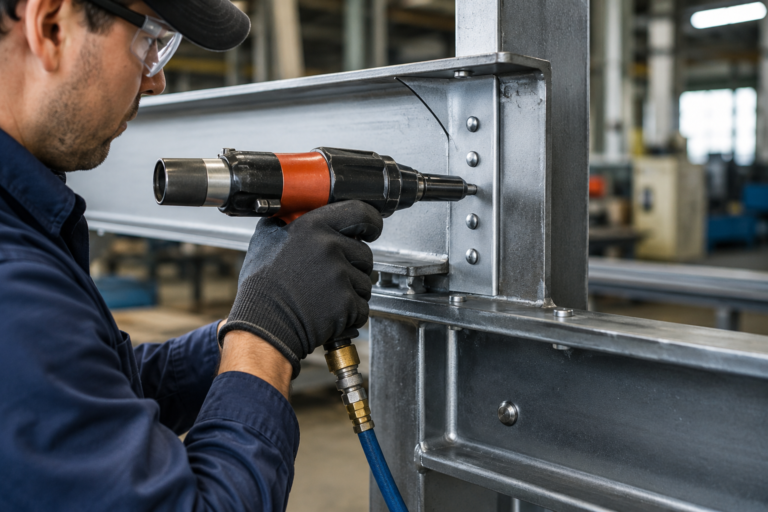
1. Select the Correct Rivet
Choose a structural blind rivet with the appropriate:
- Rivet diameter
- Grip range
- Rivet body material
- Mandrel material
- Head style
- Shear and tensile strength
- Corrosion resistance
- Installation requirements
The selected grip range must accommodate the total thickness of the materials being joined.
2. Prepare the Correct Hole Size
Prepare the installation hole according to the rivet manufacturer’s recommended hole diameter.
A hole that is too large may reduce joint performance, while a hole that is too small may prevent correct rivet insertion or installation.
3. Remove Excessive Burrs and Debris
Inspect the prepared hole and remove excessive burrs, metal chips, debris and contaminants.
Proper hole preparation helps the rivet sit correctly against the material and supports consistent installation.
4. Align and Clamp the Materials
Ensure the materials are correctly aligned and held together before installing the rivet.
Gaps between the materials may affect joint formation and clamping performance.
5. Use a Compatible Installation Tool
Use an installation tool that is compatible with the selected structural blind rivet system and rivet diameter.
Depending on the rivet, the installation equipment may be:
- Pneumatic
- Battery-powered
- Hydraulic
The tool must provide sufficient pulling capacity for the selected rivet.
6. Use the Correct Nose Assembly
A compatible nose assembly is required to install the rivet correctly.
The nose assembly must match the rivet system, diameter and mandrel design. Using an incorrect nose assembly may affect rivet installation or damage the fastener and tool.
7. Verify Complete Rivet Installation
After installation, inspect the rivet to confirm that:
- The rivet head is seated correctly
- The materials are clamped together
- The rivet has fully formed
- The mandrel has locked or broken as intended
- There are no visible signs of incomplete installation or damage
Inspection requirements may vary according to the rivet system and production quality procedures.
8. Follow Manufacturer Recommendations
Always follow the rivet manufacturer’s technical data, installation instructions and tool maintenance requirements.
Correct installation helps the rivet achieve its specified performance and supports consistent joint quality.
Choosing the Right Structural Blind Rivet
Selecting the correct structural blind rivet requires consideration of the complete joint and application requirements.
Important factors include:
- Application materials
- Total material thickness
- Required grip range
- Rivet diameter
- Hole size
- Required shear and tensile strength
- Vibration and dynamic loading
- Environmental exposure
- Corrosion requirements
- Available installation access
- Installation tool compatibility
- Nose assembly requirements
The highest-strength rivet is not necessarily the most suitable option for every application. The selected fastener should match the materials, joint design, expected loads and operating conditions.
Manufacturer technical data should be reviewed to confirm rivet performance and installation requirements.
Conclusion
Structural blind rivets provide a high-strength fastening solution for applications where access is available from only one side of the assembly.
Compared with standard blind rivets, structural blind rivets are designed to provide greater shear and tensile strength, improved joint integrity and reliable performance under demanding operating conditions.
Their combination of one-sided installation, high load capacity and resistance to vibration makes them suitable for truck and trailer manufacturing, transport equipment, construction, HVAC systems, heavy machinery and industrial metal fabrication.
Selecting the correct structural blind rivet requires consideration of the application materials, joint thickness, grip range, hole size, load requirements, operating environment and installation equipment.
Contact Top Fasteners with your application requirements for assistance selecting a suitable structural blind rivet and compatible installation tooling.