

Truck and Trailer Fasteners: Choosing the Right Fastening Solution for Strength, Reliability & Long-Term Performance
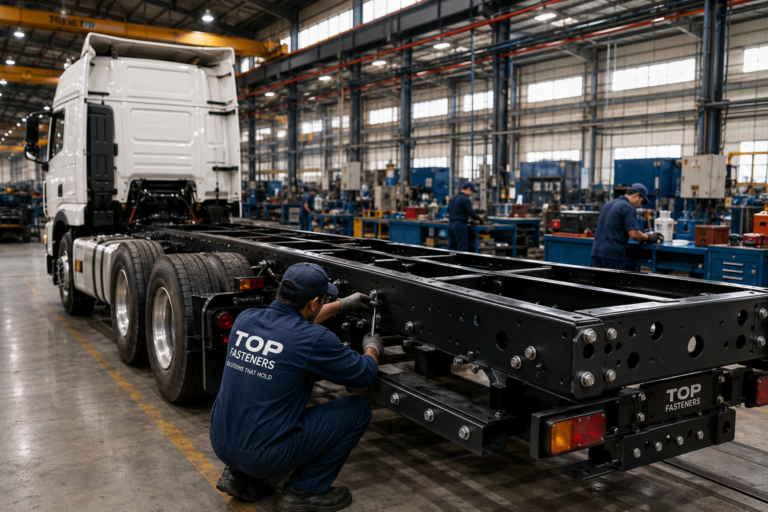
Every truck and trailer is only as reliable as the fasteners holding it together. Whether you're manufacturing semi-trailers, tipper bodies, refrigerated transport units, curtain-sided trailers, utility vehicles, or heavy-duty truck chassis, selecting the right fastening system is essential for safety, durability, and long-term performance.
Commercial vehicles operate in demanding environments where fasteners are constantly exposed to heavy loads, road shock, vibration, moisture, corrosion, and changing temperatures. Using the wrong fastener can lead to joint failure, structural damage, costly repairs, and unnecessary vehicle downtime.
Choosing the correct fastening solution, including blind rivets, structural blind rivets, and lockbolts, helps manufacturers build stronger, more reliable vehicles while reducing maintenance throughout the vehicle's service life.
In this guide, we'll explore the most commonly used truck and trailer fasteners, explain where each type is best suited, and provide practical advice to help you select the right solution for your application.
Why Fastener Selection Matters in Truck and Trailer Manufacturing
Fasteners may represent only a small percentage of a vehicle's total cost, but they play a vital role in its structural integrity and overall reliability.
Unlike static structures, trucks and trailers experience continuous movement every time they are on the road. Every journey places repeated stress on fastened joints through vibration, heavy payloads, cornering forces, braking, and uneven road surfaces.
A fastening system that performs well in one application may not be suitable for another. Selecting the right fastener depends on several factors, including the materials being joined, the expected load, environmental conditions, and whether the joint will require future disassembly.
Poor fastener selection can result in:
- Joint movement
- Fastener loosening
- Fatigue cracking
- Corrosion
- Increased maintenance
- Reduced vehicle lifespan
- Unexpected downtime
- Higher operating costs
By choosing the appropriate fastening system from the beginning, including blind rivets, structural blind rivets, and lockbolts, manufacturers can improve vehicle reliability while reducing maintenance costs over the long term.
Common Challenges Truck and Trailer Fasteners Must Withstand
Truck and trailer fasteners are designed to perform under demanding operating conditions.
Some of the biggest challenges include:
Continuous Vibration
Heavy vehicles generate constant vibration throughout their service life. If a fastening system loses clamp force, joints may begin to loosen over time.
Dynamic Loading
Loads continually shift during transport. Fasteners must withstand changing forces without compromising structural integrity.
Road Shock
Potholes, uneven roads, off-road conditions, and heavy impacts create repeated shock loading on structural joints.
Corrosion
Commercial vehicles often operate in rain, mud, coastal environments, mining sites, and areas where road salts accelerate corrosion.
Temperature Changes
Transport equipment regularly experiences extreme heat and cold, causing materials to expand and contract.
Fatigue Loading
Repeated stress cycles can eventually weaken fasteners that are not designed for heavy-duty structural applications.
Selecting high-performance fastening systems, such as structural blind rivets and lockbolts, specifically engineered for these demanding conditions helps maximise service life while improving safety and reliability.
Truck and Trailer Fastener Comparison
The table below provides a quick overview of the most common fastening solutions used in commercial vehicle manufacturing.
| Fastener | Typical Applications | Main Advantages |
|---|---|---|
| Blind Rivets | Body panels, toolboxes, mudguards | Fast installation, economical |
| Structural Blind Rivets | Structural body assemblies | High strength, excellent vibration resistance |
| Lockbolts | Trailer chassis, cross members, heavy structural components | Permanent clamp force, exceptional fatigue resistance |
| High Tensile Bolts | Suspension systems, chassis assemblies | High load capacity, removable for servicing |
| Self-Drilling Screws | Sheet metal, interior panels, HVAC | Quick installation without pre-drilling |
| Stainless Steel Fasteners | External fittings, refrigerated vehicles, marine environments | Excellent corrosion resistance |
Each fastening system offers unique advantages depending on the application.
Types of Fasteners Used in Truck and Trailer Manufacturing
Blind Rivets
Blind rivets are one of the most commonly used fasteners in truck and trailer manufacturing because they can be installed when only one side of the workpiece is accessible.
They are ideal for joining lightweight materials quickly and efficiently while providing a clean, professional finish.
Common Applications
- Aluminium body panels
- Mudguards
- Toolboxes
- Access panels
- Interior trim
- Lightweight body assemblies
Advantages
- Fast installation
- Cost-effective
- Suitable for thin materials
- Ideal for one-sided access
- Minimal installation equipment required
Closed-end blind rivets are particularly useful where moisture resistance is important, such as refrigerated vehicles or external body panels.
Structural Blind Rivets
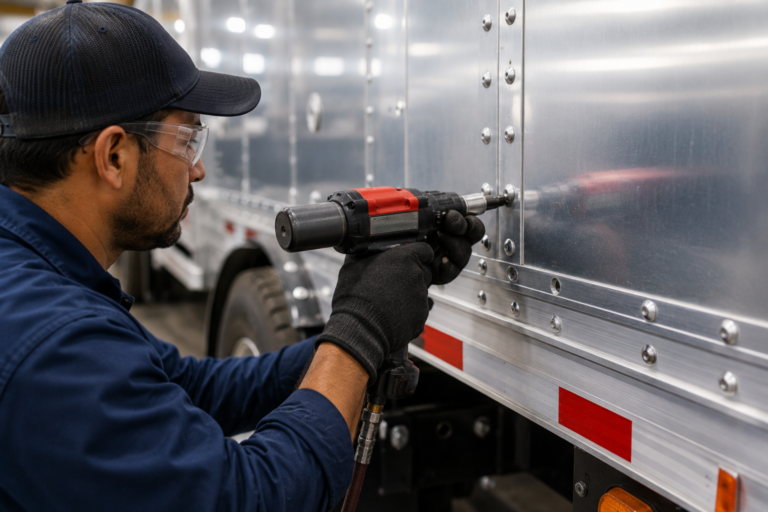
Structural blind rivets are designed for applications requiring significantly greater strength than standard blind rivets.
They offer improved shear and tensile performance while maintaining excellent vibration resistance, making them a popular choice in commercial vehicle manufacturing.
Because they can be installed from one side of the assembly, structural blind rivets are particularly useful when access to the rear of the joint is limited.
Common Applications
- Trailer body construction
- Structural body panels
- Vehicle framing
- Heavy-duty body assemblies
- Transport equipment
Advantages
- High tensile strength
- Excellent shear strength
- Strong vibration resistance
- Consistent clamp force
- Suitable for structural applications
For manufacturers looking to improve reliability without increasing installation complexity, structural blind rivets provide an excellent balance of strength and productivity.
Lockbolts
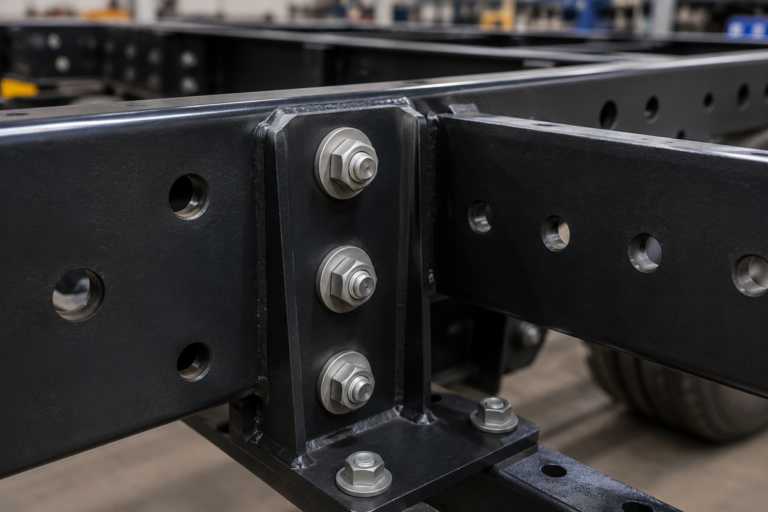
Lockbolts are widely recognised as one of the most reliable fastening systems for truck and trailer manufacturing.
Unlike conventional threaded fasteners, lockbolts create a permanent mechanical connection that resists vibration and maintains clamp force throughout the life of the joint.
This makes them particularly valuable in high-stress structural applications where loose fasteners can lead to expensive repairs or safety concerns.
Many leading truck and trailer manufacturers specify lockbolts for critical structural assemblies because they virtually eliminate the need for retightening during service.
Common Applications
- Trailer chassis
- Cross members
- Suspension brackets
- Heavy-duty body assemblies
- Structural frame components
- Transport equipment
Advantages
- Outstanding vibration resistance
- High fatigue strength
- Permanent clamp force
- Excellent structural performance
- Reduced maintenance requirements
- No retightening required
Although lockbolts require specialised installation tools, their long-term reliability often results in lower maintenance costs and improved vehicle uptime.
High Tensile Bolts
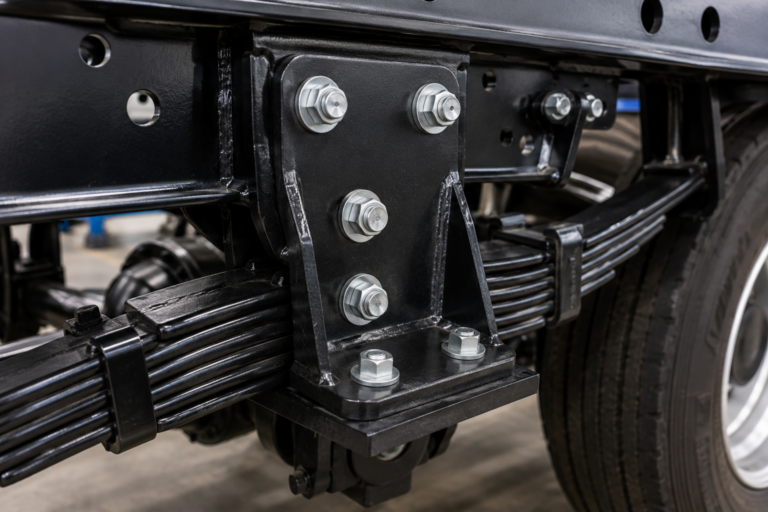
High tensile bolts remain one of the most widely used fastening solutions throughout the transport industry.
Unlike permanent fastening systems, bolted joints can be removed for inspection, servicing, or replacement, making them suitable for applications requiring future maintenance.
Their high strength and availability make them an essential component of many truck and trailer assemblies.
Common Applications
- Chassis assemblies
- Suspension systems
- Structural brackets
- Axle components
- Fifth wheel assemblies
- Heavy structural joints
Advantages
- High load capacity
- Easy maintenance
- Readily available
- Wide range of sizes and grades
- Suitable for removable joints
When correctly installed and maintained, high tensile bolts provide reliable long-term performance in demanding transport applications.
Self-Drilling Screws
Self-drilling screws are widely used in truck and trailer manufacturing where speed, efficiency, and ease of installation are important. With a drill point built into the screw, they eliminate the need for pre-drilling in many thin metal applications, reducing assembly time and labour costs.
While they are not intended for primary structural joints, self-drilling screws are an excellent choice for attaching sheet metal, interior components, and auxiliary equipment.
Common Applications
- Interior fit-outs
- Sheet metal panels
- HVAC systems
- Electrical enclosures
- Cab accessories
- Light body construction
Advantages
- Fast installation
- No pre-drilling required
- Reduced labour time
- Suitable for steel and aluminium sheet
- Easy replacement during servicing
Stainless Steel Fasteners
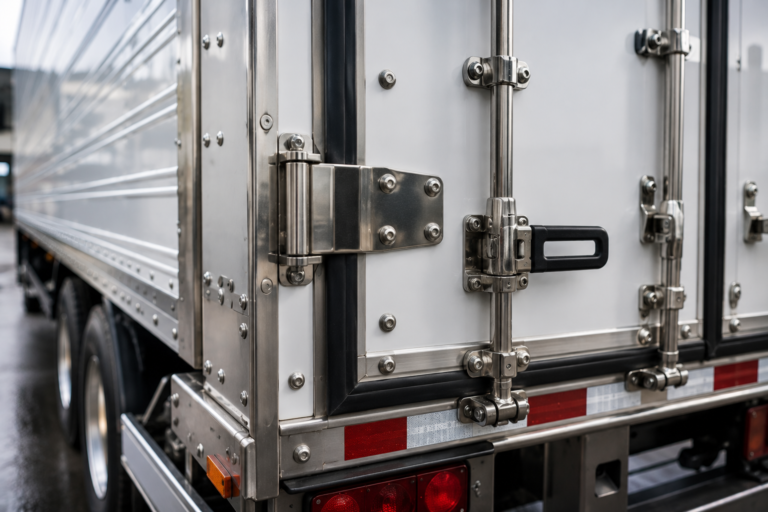
Corrosion is one of the leading causes of fastener failure in commercial vehicles. Trucks and trailers operating in coastal areas, mining environments, agriculture, food transport, or chemical industries require fastening systems capable of resisting moisture and corrosion over many years.
Stainless steel fasteners provide excellent durability while maintaining their appearance and structural integrity in harsh environments.
Common Applications
- Refrigerated trailers
- Food-grade transport vehicles
- Door hardware
- External fittings
- Toolboxes
- Marine transport equipment
- Body accessories
Choosing the Right Stainless Steel Grade
304 Stainless Steel
Suitable for most commercial vehicle applications where moderate corrosion resistance is required.
Ideal for:
- General transport equipment
- External body fittings
- Toolboxes
- Standard outdoor use
316 Stainless Steel
Recommended for highly corrosive environments, including:
- Coastal regions
- Marine applications
- Chemical industries
- Salt exposure
- Mining operations
Selecting the correct stainless steel grade can significantly extend the service life of both the fastener and the surrounding components.
How to Choose the Right Fastener
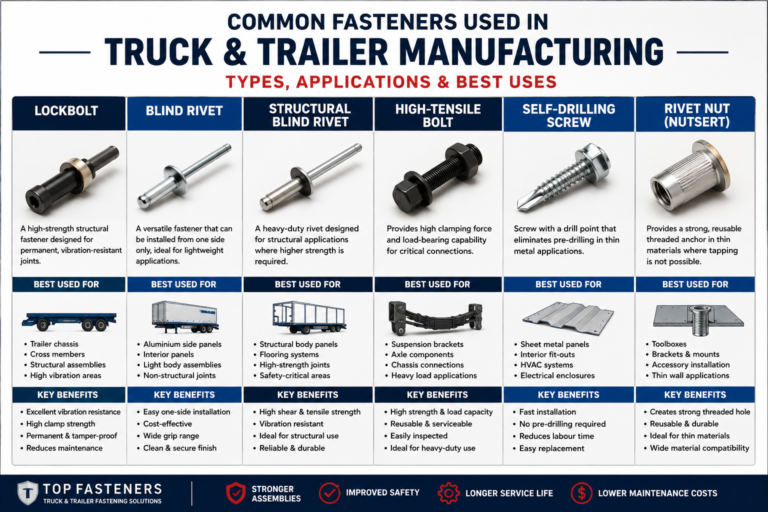
| Application | Recommended Fastener |
|---|---|
| Body panels | Blind rivets |
| Structural panels | Structural blind rivets |
| Trailer chassis | Lockbolts |
| Suspension | High tensile bolts |
| Sheet metal | Self-drilling screws |
Selecting the appropriate fastener for the expected load helps maximise durability while avoiding unnecessary costs.
3. Corrosion Resistance
Environmental conditions should always be considered during fastener selection.
Vehicles operating near the coast, in mining regions, or transporting food products often require superior corrosion protection.
Common material options include:
- Zinc-plated steel
- Galvanised steel
- Aluminium
- 304 stainless steel
- 316 stainless steel
Choosing the correct material can significantly reduce maintenance and extend service life.
4. Future Maintenance
Some assemblies are designed to remain permanent throughout the life of the vehicle, while others require periodic servicing.
Permanent structural joints often benefit from:
Assemblies requiring regular inspection or replacement are generally better suited to:
- High tensile bolts
- Self-drilling screws
Matching the fastener to the maintenance requirements helps reduce repair time and operating costs.
Recommended Fasteners for Common Truck & Trailer Applications
The following guide provides a general overview of suitable fastening systems for common commercial vehicle applications.
| Vehicle Component | Recommended Fastener |
|---|---|
| Trailer chassis | Lockbolts |
| Cross members | Lockbolts |
| Suspension brackets | High tensile bolts |
| Aluminium side panels | Blind rivets |
| Structural body panels | Structural blind rivets |
| Flooring systems | Structural blind rivets or high tensile bolts |
| Refrigerated bodies | Stainless steel fasteners, structural blind rivets |
| Toolboxes | Blind rivets |
| Mudguards | Stainless steel rivets |
| Interior fit-outs | Self-drilling screws |
While every project has unique engineering requirements, these recommendations provide a useful starting point when selecting fastening systems.
Industry Applications
Semi-Trailers
Semi-trailers experience constant dynamic loading, making vibration-resistant fastening systems essential.
Typical fastening solutions include:
- Lockbolts
- High tensile bolts
- Structural blind rivets
Tipper Bodies
Tipper bodies are subjected to heavy impact loads and repeated movement during loading and unloading.
Recommended fastening systems include:
- Lockbolts
- Structural blind rivets
- High tensile bolts
Curtain-Sided Trailers
Curtain-sided trailers combine lightweight construction with structural strength.
Common fasteners include:
- Blind rivets
- Structural blind rivets
- Stainless steel fasteners
Refrigerated Vehicles
Food transport vehicles require both corrosion resistance and hygienic construction.
Recommended products include:
- Closed-end blind rivets
- Stainless steel fasteners
- Structural blind rivets
- Taptite screws
- Multi-grip blind rivets
Utility & Service Vehicles
Utility vehicles often require fasteners that allow efficient assembly while remaining easy to service.
Common choices include:
- Blind rivets
- Self-drilling screws
- Stainless steel fasteners
- Rivet nuts
Reducing Long-Term Maintenance Costs
The initial purchase price of a fastener is only a small part of its total lifecycle cost.
Choosing a fastening system that resists vibration, fatigue, and corrosion can significantly reduce maintenance over the life of the vehicle.
Benefits include:
- Fewer inspections
- Reduced rework
- Lower maintenance costs
- Longer service life
- Improved fleet reliability
- Reduced vehicle downtime
For critical structural joints, many manufacturers choose lockbolts or structural blind rivets because they minimise the risk of vibration-induced loosening and help maintain consistent joint performance over time.
Why Quality Fasteners Matter
Fasteners are among the smallest components in a truck or trailer, yet they play one of the most important roles in vehicle safety and reliability.
Using high-quality, application-specific fastening systems helps manufacturers achieve:
- Improved structural integrity
- Consistent assembly quality
- Better vibration performance
- Reduced warranty claims
- Longer service life
- Increased customer confidence
Investing in quality fasteners from the outset can help reduce maintenance costs while improving the overall durability and performance of commercial vehicles.
Frequently Asked Questions About Truck and Trailer Fasteners
What fasteners are commonly used in truck and trailer manufacturing?
Truck and trailer manufacturers use a range of fastening systems depending on the application. Common options include blind rivets, structural blind rivets, lockbolts, high tensile bolts, self-drilling screws, stainless steel fasteners, rivet nuts, and Taptite screws. The best choice depends on the materials being joined, structural requirements, and operating environment.
Which fasteners are best for trailer chassis?
Trailer chassis require fastening systems capable of handling high loads, constant vibration, and fatigue over many years of service. Lockbolts are widely used because they provide a permanent, vibration-resistant connection, while high tensile bolts are preferred where future disassembly or maintenance is required.
Are lockbolts better than conventional bolts?
Neither fastening system is universally better—it depends on the application.
Lockbolts are ideal for permanent structural joints because they maintain clamp force and resist vibration without requiring retightening.
High tensile bolts are better suited to assemblies that require regular inspection, servicing, or replacement.
Why are structural blind rivets used in truck and trailer manufacturing?
Structural blind rivets provide greater shear and tensile strength than standard blind rivets, making them suitable for structural panels, body assemblies, and transport equipment where access is limited to one side of the joint.
They also offer excellent vibration resistance and can help improve manufacturing efficiency.
Which fasteners offer the best vibration resistance?
Lockbolts are widely regarded as one of the most vibration-resistant fastening systems available for heavy transport applications.
Structural blind rivets also provide excellent resistance to vibration and are commonly used in commercial vehicle body construction.
When should stainless steel fasteners be used?
Stainless steel fasteners are recommended when corrosion resistance is a priority.
They are commonly used in:
- Refrigerated transport
- Coastal environments
- Marine applications
- Food transport
- Chemical processing
- Mining equipment
For highly corrosive environments, 316 stainless steel generally provides greater corrosion resistance than 304 stainless steel.
Choosing the Right Truck and Trailer Fasteners
Selecting the right fastener is about more than simply choosing the strongest product. Every application has unique requirements based on load, vibration, environmental conditions, materials, and maintenance needs.
Whether you're manufacturing new commercial vehicles, repairing fleet equipment, or upgrading heavy transport machinery, choosing the appropriate fastening system can improve safety, reduce maintenance, and extend service life.
Working with an experienced fastener supplier also helps ensure you select products that meet your performance requirements while supporting efficient manufacturing and long-term reliability.
Why Choose Top Fasteners?
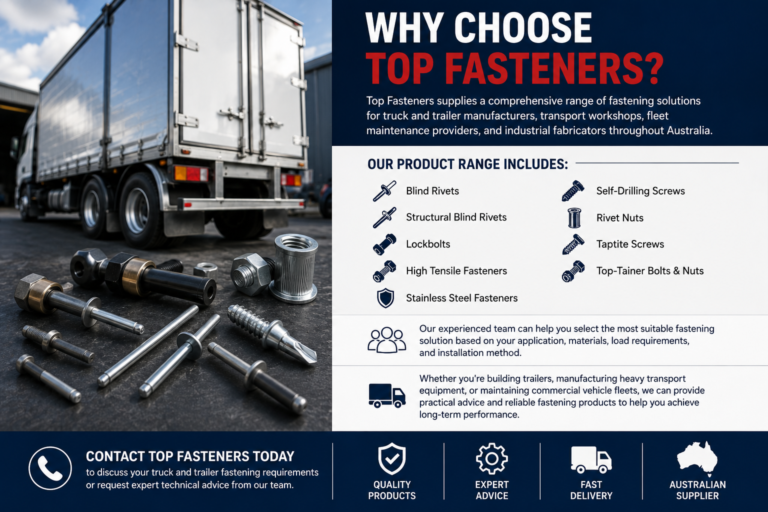
Top Fasteners supplies a comprehensive range of fastening solutions for truck and trailer manufacturers, transport workshops, fleet maintenance providers, and industrial fabricators throughout Australia.
Our product range includes:
- Blind Rivets
- Structural Blind Rivets
- Lockbolts
- High Tensile Fasteners
- Stainless Steel Fasteners
- Self-Drilling Screws
- Rivet Nuts
- Taptite Screws
- Top-Tainer Bolts & Nuts
Our experienced team can help you select the most suitable fastening solution based on your application, materials, load requirements, and installation method.
Whether you're building trailers, manufacturing heavy transport equipment, or maintaining commercial vehicle fleets, we can provide practical advice and reliable fastening products to help you achieve long-term performance.
Contact Top Fasteners today to discuss your truck and trailer fastening requirements or request expert technical advice from our team.