

RIVET TOOLS
Rivet tools are designed to install blind rivets quickly, securely and consistently across a wide range of fastening applications. Whether you're working with sheet metal, aluminium, steel or composite materials, the right rivet tool helps achieve reliable installation while improving productivity and reducing installation time.
Top Fasteners supplies professional rivet tools for automotive, transport, metal fabrication, construction, manufacturing and industrial applications throughout Australia. Our range includes manual, pneumatic and heavy-duty riveting tools designed to suit different rivet types, materials and production requirements.
Whether you need a hand riveter for occasional repairs or a pneumatic riveting tool for high-volume production, our team can help you select the right equipment for your application. Contact Top Fasteners for expert advice and product recommendations.
Our Rivet Tool Range
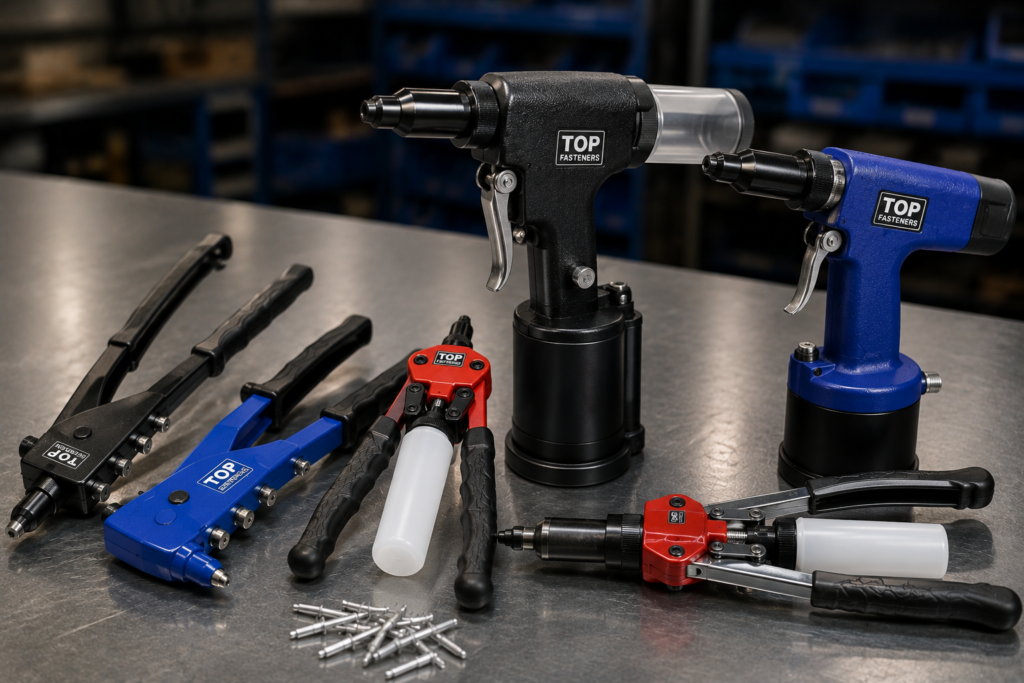
What Are Rivet Tools?
Rivet tools are installation tools designed to set blind rivets by pulling the mandrel through the rivet body until the rivet expands and secures the materials together. Once the required clamping force is achieved, the mandrel breaks at its designed break point, completing the installation.
Because blind rivets can be installed from one side of the workpiece, rivet tools are widely used where access to the rear of the material is limited or unavailable.
Different rivet tools are designed for different installation requirements. Manual hand riveters are commonly used for maintenance and low-volume work, while pneumatic and hydraulic riveting tools are better suited to repetitive production environments where speed and consistency are important.
Selecting the correct rivet tool helps improve installation quality, reduce operator fatigue and extend tool life.
Types of Rivet Tools
Top Fasteners supplies rivet tools suitable for a variety of fastening applications.
Manual Rivet Tools
Manual rivet tools are operated by hand and are suitable for low- to medium-volume installation work. They are commonly used for maintenance, repair, workshops and mobile service applications.
Pneumatic Rivet Tools
Pneumatic rivet tools use compressed air to install blind rivets quickly and consistently. They are widely used in manufacturing, fabrication and production environments where large numbers of rivets are installed every day.
Heavy-Duty Rivet Tools
Heavy-duty rivet tools are designed for installing larger blind rivets and structural blind rivets that require greater pulling force. They are commonly used in transport equipment, heavy fabrication and industrial applications.
Structural Rivet Tools
Structural rivet tools are specifically designed for compatible structural blind rivets used in applications requiring higher clamp force and vibration resistance.
Key Features and Benefits of Rivet Tools
Faster Installation
Rivet tools allow blind rivets to be installed quickly, making them suitable for both repair work and high-volume production.
Consistent Fastening
Using the correct tool helps deliver consistent rivet installation and repeatable fastening performance.
One-Sided Installation
Blind rivets can be installed from one side of the workpiece, making rivet tools ideal where rear access is restricted.
Reduced Operator Fatigue
Powered riveting tools help reduce the physical effort required for repetitive installation tasks.
Improved Productivity
Pneumatic and heavy-duty riveting tools help increase installation speed in manufacturing and fabrication environments.
Wide Compatibility
Different rivet tools are available to suit various rivet diameters, materials and installation requirements.
Reliable Performance
Professional-quality rivet tools are designed to provide dependable performance when maintained according to the manufacturer's recommendations.
Common Applications for Rivet Tools
Automotive Repairs
Suitable for installing blind rivets in body panels, brackets, trim components and vehicle accessories.
Truck and Trailer Manufacturing
Used for assembling commercial vehicles, trailers and transport equipment requiring reliable mechanical fastening.
Metal Fabrication
Ideal for fastening sheet metal, fabricated components, enclosures and structural assemblies.
Construction
Commonly used for installing cladding, roofing, architectural panels and general construction components.
HVAC Systems
Suitable for ductwork fabrication, ventilation systems and air-conditioning equipment.
Marine Applications
Blind rivets are widely used in compatible marine equipment and aluminium fabrication projects.
Industrial Manufacturing
Supports efficient installation of blind rivets during equipment assembly and production processes.
General Maintenance
Suitable for repair, maintenance and workshop applications requiring fast, reliable fastening.
General Rivet Tool Specifications
Rivet tools are available in different configurations depending on the application and rivet type.
| Specification | General Information |
|---|---|
| Tool Type | Manual, pneumatic or heavy-duty rivet tool |
| Compatible Fasteners | Blind rivets and compatible structural blind rivets |
| Installation Method | Pulls the mandrel to set the rivet |
| Power Source | Manual or compressed air, depending on the tool |
| Compatible Rivet Sizes | Varies by model |
| Applications | Automotive, fabrication, transport, construction and manufacturing |
Refer to the technical data sheet for the specifications of each rivet tool model.
How to Choose the Right Rivet Tool
Selecting the correct rivet tool depends on your application and production requirements.
Rivet Type
Confirm whether you are installing standard blind rivets or structural blind rivets, as some fasteners require specialised installation tools.
Rivet Diameter
Choose a tool that is compatible with the diameter of the rivets being installed.
Installation Volume
Manual rivet tools are suitable for occasional use, while pneumatic riveting tools are recommended for repetitive or high-volume production.
Material Being Fastened
Consider whether the rivets will be installed into aluminium, steel, stainless steel or other materials.
Working Environment
Think about whether the tool will be used in a workshop, factory, construction site or mobile service environment.
Ergonomics
For repetitive installation, powered riveting tools can help improve productivity and reduce operator fatigue.
If you are unsure which rivet tool is suitable for your application, Contact Top Fasteners for expert advice.
How to Use a Rivet Tool
Using the correct rivet tool and following the recommended installation process helps achieve a secure and consistent fastening result.
1. Prepare the Materials
Align the materials to be joined and drill a hole that matches the diameter of the selected blind rivet.
2. Insert the Rivet
Insert the blind rivet through the aligned hole until the rivet head sits flush against the surface.
3. Fit the Rivet into the Tool
Place the mandrel of the rivet into the nosepiece of the rivet tool. Ensure the correct nosepiece is fitted for the rivet size being installed.
4. Install the Rivet
Operate the rivet tool. As the mandrel is pulled, the rivet body expands behind the material, creating a secure joint.
5. Complete the Installation
Once the correct clamping force is achieved, the mandrel breaks at its designed break point, completing the installation.
6. Inspect the Fastener
Check that the rivet has been fully set and that the materials are securely fastened. If the rivet has not been installed correctly, remove it and replace it with a new rivet.
Always follow the manufacturer's instructions for the selected rivet tool and fastener.
Rivet Tools vs Rivet Nut Tools
Although both are installation tools, they are designed for different fastening systems.
| Feature | Rivet Tools | Rivet Nut Tools |
|---|---|---|
| Primary Use | Installing blind rivets | Installing rivet nuts |
| Fastener Type | Blind rivets and compatible structural blind rivets | Rivet nuts (threaded inserts) |
| Finished Joint | Permanent mechanical joint | Creates a reusable threaded connection |
| Installation Method | Pulls the mandrel to expand the rivet body | Compresses the rivet nut into the material |
| Typical Applications | Sheet metal, fabrication, transport, construction | Equipment, enclosures, automotive and assemblies requiring removable fasteners |
If your application requires a permanent fastening solution, a rivet tool and blind rivets are generally the appropriate choice. If you need a reusable threaded fixing point, consider a rivet nut tool and rivet nuts.
Tool Care and Maintenance
Regular maintenance helps maximise the performance and service life of your rivet tools.
Follow these general maintenance practices:
- Inspect the tool before each use for wear or damage.
- Use the correct nosepiece for the selected rivet size.
- Keep the tool clean and free from metal debris.
- Lubricate moving parts according to the manufacturer's recommendations.
- Replace worn jaws, nosepieces or other wear components when required.
- Check pneumatic air pressure and fittings for air-powered tools.
- Store tools in a clean, dry location when not in use.
Routine maintenance helps improve installation consistency and reduce downtime. For professional tool servicing and support, Contact Top Fasteners.
Explore Related Fastening Products
Top Fasteners supplies a complete range of fastening products and installation equipment for industrial applications.
Explore our related products:
- Blind Rivets – Permanent fastening solutions for sheet metal and general fabrication.
- Structural Blind Rivets – High-strength blind rivets for demanding structural applications.
- Rivet Nuts – Create strong, reusable threads in thin materials.
- Lockbolt Tools – Installation equipment for compatible lockbolt systems.
- Nose Assemblies – Compatible tooling for lockbolt installation.
Frequently Asked Questions About Rivet Tools
What is a rivet tool?
A rivet tool is a hand-operated or powered installation tool used to install blind rivets by pulling the mandrel and expanding the rivet body to create a permanent fastening.
What types of rivet tools are available?
Common options include manual rivet tools, pneumatic rivet tools and heavy-duty riveting tools for larger or structural blind rivets.
What are rivet tools used for?
Rivet tools are used to install blind rivets in automotive, transport, metal fabrication, construction, HVAC, marine and industrial manufacturing applications.
Can one rivet tool install every rivet size?
No. Each rivet tool has compatible rivet size ranges. Always check the manufacturer's specifications before installation.
What is the difference between a rivet tool and a rivet gun?
The terms are often used interchangeably. Both refer to tools designed to install blind rivets, although some users use "rivet gun" to describe powered models.
Can rivet tools install structural blind rivets?
Some heavy-duty rivet tools are designed for compatible structural blind rivets. Always confirm compatibility before use.
How do I choose the right rivet tool?
Consider the rivet type, rivet diameter, installation volume, work environment and whether a manual or powered rivet tool is best suited to your application.
Do pneumatic rivet tools require an air compressor?
Yes. Pneumatic rivet tools operate using compressed air and require a suitable air supply.
How often should rivet tools be maintained?
Inspect tools regularly and perform maintenance according to the manufacturer's recommendations. High-use production tools may require more frequent servicing. For professional tool servicing, Contact Top Fasteners.
Can Top Fasteners help me choose a rivet tool?
Yes. Our team can recommend a suitable rivet tool based on your application, rivet type and production requirements. Contact Top Fasteners for expert advice and product recommendations.
Why Choose Top Fasteners?
Top Fasteners supplies professional rivet tools for workshops, manufacturers, fabricators and industrial businesses throughout Australia.
We offer quality fastening solutions backed by technical knowledge and practical industry experience. Whether you're installing standard blind rivets or structural blind rivets, our team can help you select the right tool for reliable and efficient installation.
Contact Top Fasteners for expert advice, product recommendations and assistance choosing the right rivet tool for your application.
Need Help Choosing the Right Rivet Tool?
Whether you need a manual rivet tool for occasional repairs or a pneumatic riveting tool for production work, Top Fasteners can help you find the right solution.
Contact our team for product recommendations, technical information and assistance selecting compatible rivet tools and fastening products.