

ABRASIVE BELTS
Abrasive belts are versatile sanding and grinding products designed for efficient material removal, surface preparation and finishing across metal fabrication, manufacturing, construction and industrial applications.
Top Fasteners supplies quality abrasive belts that deliver consistent performance for grinding, blending, deburring and finishing a wide range of compatible materials. Whether you're removing weld marks, preparing metal surfaces or achieving a smooth finish, our abrasive belts provide reliable results for professional users.
Our Abrasive Belt Range
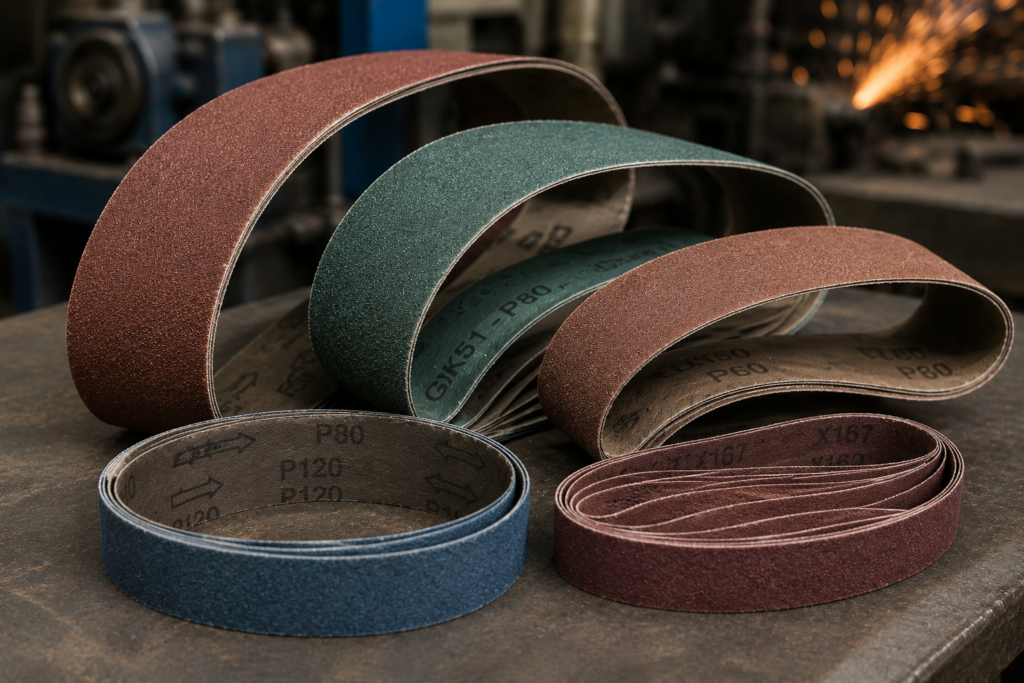
ABRASIVE BELTS
What Are Abrasive Belts?
Abrasive belts are continuous loops of abrasive material designed to fit compatible belt sanders and grinding machines. They are used to remove material, smooth surfaces and prepare components for painting, coating, welding or assembly.
Available in a variety of grit sizes and abrasive materials, abrasive belts can be selected for everything from aggressive stock removal to fine surface finishing. Their continuous design provides consistent contact with the workpiece, making them suitable for high-volume industrial applications as well as precision fabrication work.
Key Features and Benefits
Efficient Material Removal
Abrasive belts remove material quickly while helping maintain a consistent finish across the workpiece.
Wide Range of Grit Options
Different grit sizes allow users to choose the right balance between rapid material removal and fine finishing.
Consistent Surface Finish
The continuous belt design helps produce smooth, uniform finishes across flat, curved and contoured surfaces.
Suitable for Various Materials
Depending on the product, abrasive belts may be suitable for steel, stainless steel and other compatible materials. Always refer to the manufacturer's recommendations.
High Productivity
Abrasive belts are ideal for production environments where efficiency and repeatable results are important.
Versatile Applications
Suitable for grinding, sanding, blending, deburring and finishing across a wide range of industrial applications. Explore our full range of abrasives for other cutting, grinding and finishing solutions.
Common Applications
Abrasive belts are widely used wherever controlled sanding and finishing are required.
Weld Blending
Smooth welds and create seamless transitions between joined metal surfaces.
Surface Preparation
Prepare metal surfaces before painting, coating or additional fabrication processes.
Deburring
Remove sharp edges and burrs left after cutting, drilling or machining.
Metal Finishing
Achieve a clean, professional finish on fabricated metal components.
Manufacturing
Support production processes requiring consistent material removal and surface finishing.
Maintenance and Repair
Restore worn or damaged components during industrial maintenance and repair work.
General Product Information
Specifications vary depending on the abrasive belt selected.
| Feature | General Information |
|---|---|
| Product Type | Abrasive sanding belt |
| Primary Function | Grinding, sanding and surface finishing |
| Suitable Materials | Steel, stainless steel and other compatible materials |
| Compatible Equipment | Belt sanders and compatible grinding machines |
| Grit Sizes | Varies by product |
| Belt Dimensions | Refer to manufacturer specifications |
Always choose an abrasive belt that matches your equipment and application.
How to Choose the Right Abrasive Belt
Selecting the correct abrasive belt improves efficiency, finish quality and belt life.
Material Being Worked
Choose an abrasive belt suitable for the material you are grinding or sanding.
Grit Size
Coarse grits are generally used for rapid material removal, while finer grits are used for blending and finishing.
Belt Dimensions
Ensure the belt size matches your sanding or grinding equipment.
Required Finish
Select the grit and abrasive type based on the desired surface finish.
Production Requirements
Consider whether your application requires aggressive stock removal or precision finishing.
If you're unsure which abrasive belt is best for your application, the experienced team at Top Fasteners can help you select the right product.
Safe Use of Abrasive Belts
Safe Use and Best Practices
Using abrasive belts correctly helps support safe operation, consistent performance and longer belt life. Always follow the abrasive and equipment manufacturer’s instructions.
- Wear Appropriate Personal Protective Equipment
Wear suitable eye protection, hearing protection and other PPE required for the material, equipment and working environment. - Inspect the Belt Before Use
Check the abrasive belt for tears, damaged joints, excessive wear or other visible defects. Do not use a damaged belt. - Use Compatible Equipment
Make sure the abrasive belt dimensions and specifications are suitable for the belt sander or grinding equipment being used. - Check Belt Direction
If the abrasive belt has a directional arrow, install it according to the direction indicated by the manufacturer. - Secure the Workpiece
Secure the material where appropriate to maintain control during sanding or grinding. - Avoid Excessive Pressure
Allow the abrasive belt and equipment to perform the work. Excessive pressure may increase heat, reduce belt life or affect the surface finish. - Store Abrasive Belts Correctly
Store abrasive belts according to the manufacturer’s recommendations and protect them from moisture, extreme temperatures and physical damage.
Abrasive Belts vs Grinding Wheels
Abrasive belts and grinding wheels are both used for material removal and surface preparation, but they are suited to different applications.
| Feature | Abrasive Belts | Grinding Wheels |
|---|---|---|
| Primary Use | Sanding, blending and finishing | Grinding and material removal |
| Abrasive Format | Continuous flexible belt | Bonded abrasive wheel |
| Surface Finishing | Excellent | Suitable for heavier grinding |
| Typical Applications | Blending, deburring and finishing | Weld grinding, shaping and edge preparation |
| Compatible Equipment | Belt sanders and compatible machines | Angle grinders and compatible grinding equipment |
The right abrasive depends on the material, equipment and finish required.
Explore Related Abrasive Products
Related Products
Top Fasteners supplies abrasive products for cutting, grinding, sanding and surface preparation.
Explore our related products:
- Grinding Wheels – Designed for weld grinding, material removal and edge preparation.
- Cut Off Wheels – Designed for fast and precise cutting of metal and other compatible materials.
- Abrasives – Explore our broader range of abrasive products for professional applications.
Frequently Asked Questions About Abrasive Belts
What are abrasive belts used for?
Abrasive belts are used for grinding, sanding, blending, deburring and surface finishing. Their exact applications depend on the abrasive type, grit and material being worked.
What materials can abrasive belts be used on?
Depending on the product, abrasive belts may be suitable for steel, stainless steel and other compatible materials. Always check the manufacturer’s specifications.
How do I choose the right abrasive belt?
Consider the material being worked, required finish, grit size, belt dimensions and compatibility with your sanding or grinding equipment when selecting an abrasive belt. If you're unsure which product is right for your application, contact Top Fasteners for expert advice.
What grit abrasive belt should I use?
The correct grit depends on the application. Coarser grits are generally suited to heavier material removal, while finer grits are typically used for blending and finishing with abrasive belts.
What is the difference between abrasive belts and grinding wheels?
Abrasive belts provide a continuous flexible abrasive surface and are commonly used for sanding, blending and finishing. Grinding wheels are bonded abrasive products commonly used for heavier grinding and material removal.
Can abrasive belts be used for metal?
Many abrasive belts are designed for metalworking applications. Check the product specifications to ensure the selected belt is compatible with the material being worked.
How long do abrasive belts last?
Abrasive belt life depends on the abrasive type, material, application, operating conditions and pressure applied during use.
When should an abrasive belt be replaced?
Replace an abrasive belt if it becomes damaged, excessively worn or no longer delivers the required cutting or finishing performance.
How should abrasive belts be stored?
Store abrasive belts according to the manufacturer’s recommendations in conditions that protect them from moisture, extreme temperatures and physical damage.
Can Top Fasteners help me choose the right abrasive belt?
Yes. Contact the Top Fasteners team with your equipment, material and application requirements for help selecting a suitable abrasive belt.
Why Choose Top Fasteners?
Top Fasteners supplies quality abrasive belts and other abrasive products for fabrication, manufacturing, maintenance and industrial applications across Australia.
Our team can help you select abrasive products suited to your equipment, material and application requirements.
From material removal and weld blending to deburring and surface finishing, we can help you find the right abrasive solution for the job. Contact Top Fasteners for expert product recommendations and support.
Need Help Choosing the Right Abrasive Belt?
Not sure which abrasive belt suits your application?
Contact Top Fasteners for assistance selecting abrasive belts based on your equipment, material, grit requirements and desired finish.