

CONSTRUCTION FASTENERS FOR BUILDING, FABRICATION & INDUSTRIAL APPLICATIONS
Top Fasteners supplies reliable construction fasteners and fastening solutions for building, fabrication, roofing, cladding and industrial applications. Our range includes blind rivets, structural blind rivets, rivet nuts, lockbolts, large flange rivets and fastening tools for a wide variety of construction and assembly requirements.
Whether you need a fastener for sheet metal, building panels, fabricated components or a demanding industrial application, choosing the right product is important for achieving a secure and reliable connection.
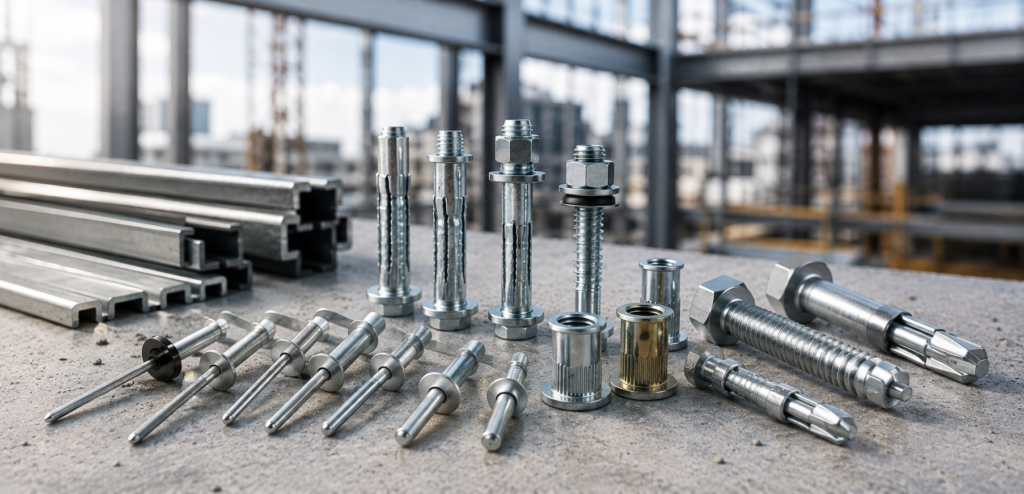
Construction Fasteners for Australian Building and Industrial Applications
Construction projects can involve different materials, joint designs, access conditions and performance requirements. The right fastening solution needs to suit the materials being joined while providing the strength, durability and installation performance required for the application.
Top Fasteners provides a range of industrial fastening products designed to support construction, fabrication, maintenance and assembly work.
Our construction fastener range includes solutions for applications where fast installation, reliable connections and limited access to the rear of the workpiece are important.
From standard blind rivets to structural blind rivets, rivet nuts and lockbolts, we can help you select a fastening solution based on your material, thickness, application and installation requirements.
Construction Fastener Products
Top Fasteners supplies a range of fastening products suitable for different construction and industrial applications.
BLIND RIVETS
Blind rivets provide a practical fastening solution when access to the rear of the materials is limited. They can be installed from one side of the workpiece, making them useful for sheet metal, panels, fabrication and general assembly applications.
Blind rivets are available in different materials, sizes, head styles and grip ranges to suit different fastening requirements.
STRUCTURAL BLIND RIVETS
Structural blind rivets are designed for applications where higher joint strength and fastening performance are required. They can provide a secure connection in demanding applications where resistance to vibration and reliable clamping are important.
The correct structural blind rivet depends on the materials being joined, joint requirements, material thickness and the performance required from the connection.
RIVET NUTS
Rivet nuts provide a threaded fastening point in sheet materials, hollow sections and other applications where access to the rear of the workpiece may be restricted.
Once installed, a rivet nut provides an internal thread that allows components to be attached using a conventional screw or bolt. This makes rivet nuts useful for construction, fabrication, equipment assembly and maintenance applications.
LOCKBOLTS
Lockbolts provide a high-strength fastening solution for applications where secure joints, consistent clamping and resistance to vibration are important.
They are commonly considered for demanding construction, fabrication and industrial applications where a robust permanent fastening system is required.
LARGE FLANGE RIVETS
Large flange rivets feature a larger head diameter than standard blind rivets, providing a wider bearing surface over the material being fastened.
This design can be useful when fastening thinner or softer materials where distributing the load over a larger area is beneficial.
Construction Fastener Applications
Construction fasteners can be used across a wide range of building, fabrication and industrial applications. The appropriate fastener depends on the materials, joint design, environmental conditions and required performance.
🏗️ Metal Fabrication
Fasteners are widely used in the fabrication and assembly of sheet metal, steel and aluminium components. Blind rivets, rivet nuts and other fastening products can provide practical solutions for joining and assembling fabricated components.
🏢 Building Panels and Cladding
Fastening solutions may be required when installing or assembling building panels, sheet materials and fabricated components. Blind fastening systems can be particularly useful where access to the rear of the joint is restricted.
🏠 Roofing and Sheet Metal
Construction and roofing applications can involve thin sheet materials where selecting the correct fastener is important. The fastener should be suitable for the material thickness, environmental conditions and required joint performance.
🏭 Industrial Construction
Industrial construction and installation projects can require fastening systems capable of providing secure and reliable connections in demanding environments.
Structural blind rivets, lockbolts and other industrial fastening products can be considered where higher fastening performance is required.
🔧 Maintenance and Repair
Fasteners are also used for maintenance, replacement and repair work. Rivet nuts, blind rivets and other removable or permanent fastening solutions can help simplify assembly and component replacement.
How to Choose the Right Construction Fastener
Selecting the correct construction fastener depends on more than just the size of the fastener. Consider the materials, thickness, access, strength requirements and environment before choosing a product.
01. Consider the Materials Being Joined
The fastener material should be compatible with the materials being joined and the conditions in which the connection will be used.
Common fastener materials include aluminium, steel and stainless steel. Material selection can affect strength, corrosion resistance and long-term performance.
02. Check the Material Thickness
Fasteners have specific grip ranges. The total thickness of the materials being joined should fall within the recommended grip range of the fastener.
Using the wrong grip range can affect the quality and reliability of the finished connection.
03. Consider the Required Strength
Different applications have different performance requirements.
Standard blind rivets may be suitable for many general fastening applications, while structural blind rivets or lockbolts may be more appropriate where higher joint strength and fastening performance are required.
04. Check Access to the Joint
One of the advantages of blind fastening systems is that they can be installed when only one side of the workpiece is accessible.
This can make blind rivets and rivet nuts particularly useful for enclosed sections, panels, fabricated assemblies and other restricted-access applications.
05. Consider the Environment
For applications exposed to moisture, weather or potentially corrosive conditions, the fastener material and finish should be carefully considered.
Stainless steel fasteners may be appropriate for some environments, while other applications may require different materials or finishes.
06. Consider the Installation Method
The correct installation tool is important for achieving consistent fastening results.
Depending on the fastener, application and production requirements, installation may involve manual, pneumatic, hydraulic or specialised fastening equipment.
Why Use Blind Fasteners in Construction?
🔩 One-Sided Installation
Blind rivets and other blind fastening products can be installed from one side of the workpiece. This can simplify installation when the rear of the joint cannot be reached.
⚡ Efficient Installation
Blind fastening can provide a quick and practical way to join materials, particularly when multiple fasteners need to be installed during fabrication or assembly.
🔧 Suitable for Different Materials
Different blind rivet materials, sizes and configurations are available for a range of applications, allowing you to select a fastening solution suited to the materials being joined.
🚧 Useful for Restricted Access
Where conventional bolts and nuts are difficult to install because the rear of the workpiece is inaccessible, blind fastening systems can provide an alternative solution.
🏭 Wide Range of Applications
Blind fastening products can be used across fabrication, construction, roofing, cladding, maintenance and industrial assembly applications, provided the selected product is suitable for the specific application.
Construction Fastening Tools
Selecting the correct fastener is only part of achieving a reliable connection. The appropriate installation tool is also important.
Top Fasteners supplies fastening equipment and components designed to support industrial fastening applications, including riveting tools, nose assemblies and lockbolt tools.
Using the correct installation equipment can help improve installation consistency, productivity and overall fastening performance.
Fastener Materials for Construction Applications
The material of a construction fastener can influence its strength, corrosion resistance and suitability for a particular application.
Aluminium Fasteners
Aluminium fasteners provide a lightweight fastening option for suitable construction applications where weight and corrosion resistance are important.
They can be considered for applications where compatibility with the joined materials and operating environment is required.
Steel Fasteners
Steel fasteners provide a strong and durable fastening option for suitable construction applications where strength and reliability are important.
The appropriate grade and finish should be selected based on the joined materials and environmental conditions.
Stainless Steel Fasteners
Stainless steel fasteners provide excellent corrosion resistance for suitable construction applications exposed to moisture and demanding environments.
The appropriate stainless steel grade should be selected based on the environment, materials and application requirements.
Construction Fasteners for Different Project Requirements
There is no single fastener that is suitable for every construction application. The right choice depends on the materials, joint requirements, environment and installation method.
🔩 MATERIAL
Material being joined
📏 THICKNESS
Total material thickness
📐 GRIP RANGE
Required grip range
💪 JOINT STRENGTH
Required joint strength
↔️ ACCESS
Access to the rear of the joint
💧 ENVIRONMENT
Exposure to moisture or corrosion
🛠️ TOOLS
Installation equipment
⚡ INSTALLATION
Required installation speed
🔒 CONNECTION TYPE
Permanent or removable
Choosing the appropriate fastener for the application can help achieve a more reliable and consistent connection.
Why Choose Top Fasteners for Construction Fasteners?
Top Fasteners supplies industrial fastening products for construction, fabrication, maintenance and other demanding applications.
🔩 Quality Fastening Products
Our range includes blind rivets, structural blind rivets, rivet nuts, lockbolts, large flange rivets and related fastening tools.
🎯 Solutions for Different Applications
Different projects require different fastening methods. Our product range provides options for general fastening, restricted-access applications and demanding industrial connections.
🛠️ Application-Focused Support
If you’re unsure which fastener is suitable, our team can help you consider factors such as material, thickness, grip range, application and installation requirements.
🏭 Industrial Fastening Expertise
We focus on fastening products and solutions for businesses that require reliable products for fabrication, construction, assembly and industrial applications.
Frequently Asked Questions About Construction Fasteners
What are construction fasteners?
Construction fasteners are products used to join, secure or assemble materials and components in building, fabrication, installation and industrial applications. They include products such as blind rivets, structural blind rivets, rivet nuts, lockbolts, screws, bolts and other specialised fastening systems.
What type of fastener is best for construction?
The best fastener depends on the materials being joined, material thickness, required strength, access to the joint, environmental conditions and installation method. Blind rivets, structural blind rivets, rivet nuts and lockbolts can each be suitable for different construction and industrial applications.
What are blind rivets used for?
Blind rivets are used to join materials when access to the rear of the workpiece is limited or unavailable. They are commonly used in sheet metal, fabrication, panels, construction and general assembly applications.
When should I use structural blind rivets?
Structural blind rivets may be considered for applications requiring higher fastening performance than standard blind rivets. The appropriate product should be selected according to the materials, joint requirements and manufacturer’s technical specifications.
What are rivet nuts used for?
Rivet nuts are used to create a threaded fastening point in materials such as sheet metal and hollow sections. They can be useful when a component needs to be attached with a removable screw or bolt and access to the rear of the material is restricted.
How do I choose the right construction fastener?
Start by identifying the materials being joined, total material thickness, required strength, grip range, environmental conditions and installation method. If you are unsure, consult a fastening specialist before selecting a product.
Are stainless steel fasteners suitable for outdoor applications?
Stainless steel fasteners can be suitable for many outdoor applications because of their corrosion resistance. However, the appropriate stainless steel grade should be selected according to the specific environmental conditions and application requirements.
Find the Right Construction Fastener for Your Application
Choosing the right fastener can make a significant difference to the reliability and efficiency of a construction or industrial assembly.
Top Fasteners supplies a range of construction fasteners and industrial fastening solutions, including blind rivets, structural blind rivets, rivet nuts, lockbolts, large flange rivets and fastening tools.
If you need help selecting a suitable fastener for your materials, thickness or application, contact the Top Fasteners team.