

RAILWAY FASTENERS AND FASTENING SOLUTIONS
Top Fasteners supplies railway fasteners and fastening solutions for rail vehicles, railway equipment, manufacturing, fabrication, maintenance and repair applications.
Our fastening range includes blind rivets, structural blind rivets, lockbolts, rivet nuts, well nuts and related fastening products for assemblies where reliable fastening, installation access and long-term performance are important.
Whether you’re working on rail vehicles, passenger carriages, freight equipment or railway components, our team can help you identify a suitable fastening solution for your application.
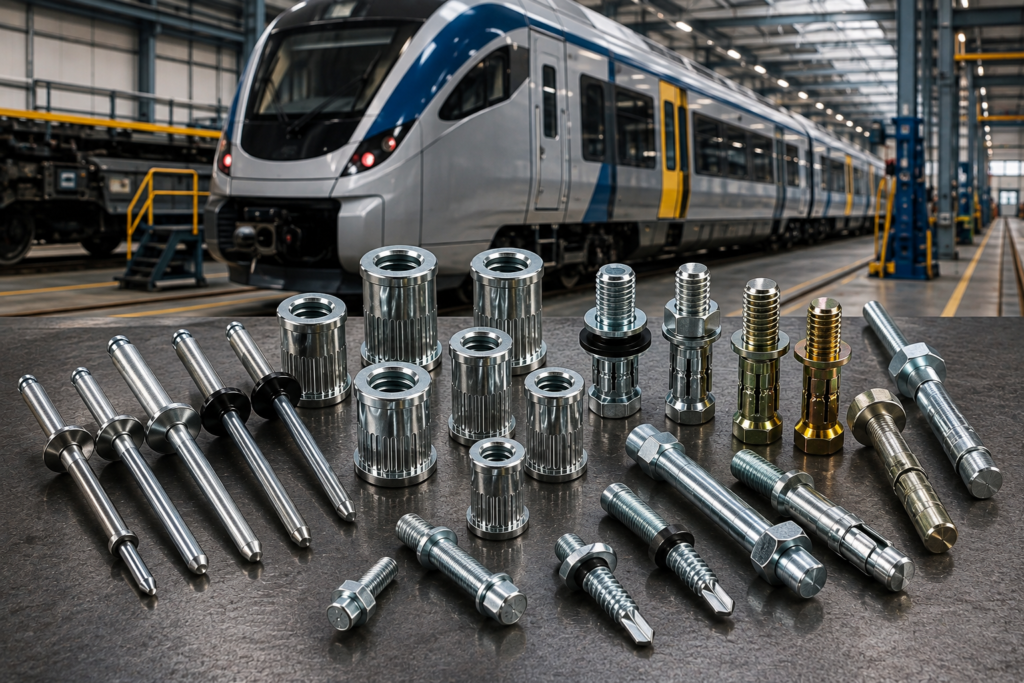
Fasteners for Railway and Rail Transport Applications
Railway equipment and rail vehicles are exposed to vibration, repeated movement, dynamic loads and changing environmental conditions. Fastener selection is therefore important for maintaining secure and reliable assemblies.
Top Fasteners provides fastening solutions for railway manufacturing, fabrication, maintenance and repair applications. Our range includes blind rivets, structural blind rivets, lockbolts, rivet nuts and well nuts.
Depending on the component and application, railway fasteners may be used for panels, brackets, interior components, equipment housings and other assemblies where reliable mechanical fastening is required.
Railway Fasteners & Products
Explore fastening products commonly used for railway equipment, rail vehicles and related fabrication applications.
BLIND RIVETS
Blind rivets provide a practical one-sided fastening solution where access to the rear of the assembly is limited. They can be used for selected panels, brackets, covers and other railway components.
STRUCTURAL BLIND RIVETS
Structural blind rivets are designed for applications requiring strong and reliable mechanical fastening. They can be considered for demanding railway assemblies where installation access is limited.
LOCKBOLTS
Lockbolts provide secure mechanical fastening for applications requiring reliable joints. They can be suitable for selected railway equipment and assemblies where strength and resistance to movement are important.
RIVET NUTS
Rivet nuts create an internal threaded fastening point in materials where access to the rear of the panel is limited. They can be useful for railway equipment, panels, enclosures and removable components.
WELL NUTS
Well nuts provide blind fastening while also offering vibration isolation and sealing properties. They can be suitable for selected railway panels, equipment and components where these characteristics are required.
FASTENING TOOLS
The correct installation tool helps ensure consistent and reliable fastening. Top Fasteners supplies tools for selected rivet and fastening applications.
Railway Fastener Applications
Railway fasteners can be used across a range of rail vehicle, equipment and maintenance applications.
| Application | Common Fastening Requirements |
|---|---|
| Rail Vehicles | Reliable fastening for panels, components and equipment |
| Passenger Carriages | Practical fastening for interior and exterior components |
| Freight Wagons | Secure fastening for equipment, panels and fabricated assemblies |
| Railway Equipment | Reliable fastening for housings, brackets and equipment components |
| Interior Components | Accessible fastening for panels, fixtures and removable components |
| Maintenance & Repairs | Practical fastening solutions for replacement and repair work |
Fasteners for Demanding Railway Conditions
Railway applications can expose fastening systems to repeated movement and changing operating conditions. Selecting the appropriate fastener can help support reliable performance.
📳 Vibration
Rail vehicles and railway equipment experience continuous vibration during operation. Fastener selection should consider the effect of repeated movement on the joint.
⚖️ Dynamic Loads
Railway components can experience changing loads during operation. Fastening requirements should be considered alongside the design and function of the assembly.
🔄 Repeated Movement
Components may be exposed to ongoing movement and mechanical stress. Suitable fastening products should be selected according to the specific application.
💧 Moisture & Corrosion
Railway equipment may be exposed to rain, moisture and outdoor conditions. Fastener material and finish should be selected according to the operating environment.
🌡️ Temperature Changes
Railway equipment can operate in changing weather and temperature conditions. The expected environment should be considered when selecting fastening products.
Choosing the Right Railway Fastener
Selecting a suitable railway fastener depends on the materials, joint requirements and installation conditions.
| Consideration | What to Check |
|---|---|
| Material | Steel, aluminium, stainless steel or other compatible materials |
| Material Thickness | Combined thickness and required grip range |
| Joint Strength | Required fastening and load requirements |
| Installation Access | One-sided or two-sided access to the assembly |
| Vibration | Exposure to repeated movement and vibration |
| Environment | Moisture, corrosion and temperature conditions |
| Component Type | Panel, bracket, equipment housing or structural component |
| Installation Equipment | Compatibility with available fastening tools |
If you’re unsure which railway fastener is suitable, the Top Fasteners team can help you select a product based on your application and fastening requirements.
Railway Fasteners for Different Requirements
Different railway applications can require different fastening characteristics.
Reliable Mechanical Strength
Applications exposed to repeated loads or movement may require fastening systems selected for the required joint strength and application conditions.
Limited Rear Access
Blind fastening products can be useful when the rear of a panel or component cannot be accessed during installation.
Lightweight Components
Railway assemblies may incorporate aluminium, sheet metal and other lightweight materials. Fastener selection should account for the materials being joined.
Vibration & Movement
Fasteners used in rail applications should be selected with consideration for repeated vibration and movement during operation.
Corrosion Resistance
Outdoor railway equipment can be exposed to moisture and environmental conditions. Appropriate fastener materials and finishes can help address corrosion requirements.
Fastening Solutions for Railway Applications
Efficient fastening is important during railway manufacturing, fabrication, maintenance and repair work.
The right fastening solution can help teams:
✔ Improve installation efficiency
✔ Maintain consistent assembly
✔ Select suitable products for different materials
✔ Reduce unnecessary fastener changes
✔ Simplify maintenance and repair work
✔ Support reliable railway equipment assemblies
For repetitive production and maintenance work, fastener selection should consider the complete application rather than simply choosing a fastener based on size or cost.
Why Choose Top Fasteners for Railway Applications?
Top Fasteners supplies fastening products and practical support for Australian railway, manufacturing, fabrication and maintenance applications.
🧰 Product Knowledge
Get practical assistance selecting fastening products based on your railway application.
📦 Wide Product Range
Access fastening solutions for panels, equipment, assemblies and other railway applications.
🛠️ Technical Support
Our team can provide product information and help you understand fastening requirements.
🎯 Application-Focused Advice
We consider materials, thickness, joint requirements, installation access and operating conditions when helping you select a suitable fastener.
🇦🇺 Australian Supply
Top Fasteners supplies fastening products to customers across Australia.
Need Help Choosing Railway Fasteners?
Not sure which fastener is right for your railway or rail equipment application?
Our team can help you select a suitable fastening solution based on your materials, component requirements, installation method and operating environment.
Frequently Asked Questions About Railway Fasteners
What fasteners are commonly used in railway applications?
Common options can include blind rivets, structural blind rivets, lockbolts, rivet nuts and other fastening products. The appropriate fastener depends on the component, materials, joint requirements and installation conditions.
Are blind rivets suitable for railway applications?
Blind rivets can be suitable for selected railway applications, particularly where fastening access is available from only one side. Product selection should be based on the materials, thickness and requirements of the joint.
When should structural blind rivets be used?
Structural blind rivets can be considered for applications requiring strong and reliable mechanical fastening, particularly where access to the rear of the assembly is limited.
What fasteners are suitable for railway equipment panels?
The appropriate fastener depends on the panel material, thickness, joint requirements and installation access. Blind rivets, rivet nuts and other suitable fastening products may be used for different applications.
What should I consider when choosing railway fasteners?
Consider the material, material thickness, required joint strength, installation access, vibration, environmental exposure, corrosion requirements and installation equipment.
Can Top Fasteners help select railway fasteners?
Yes. Top Fasteners can provide product information and practical assistance to help you identify a suitable fastening solution for your railway or rail equipment application.
Need a Railway Fastening Solution?
Whether you’re manufacturing rail equipment, fabricating railway components or carrying out maintenance and repairs, Top Fasteners can help you identify suitable fastening products.
Contact Top Fasteners for product recommendations, technical information and fastening support.