

When and Why to Use Duo-Lock Structural Blind Rivets Instead of Standard Blind Rivets
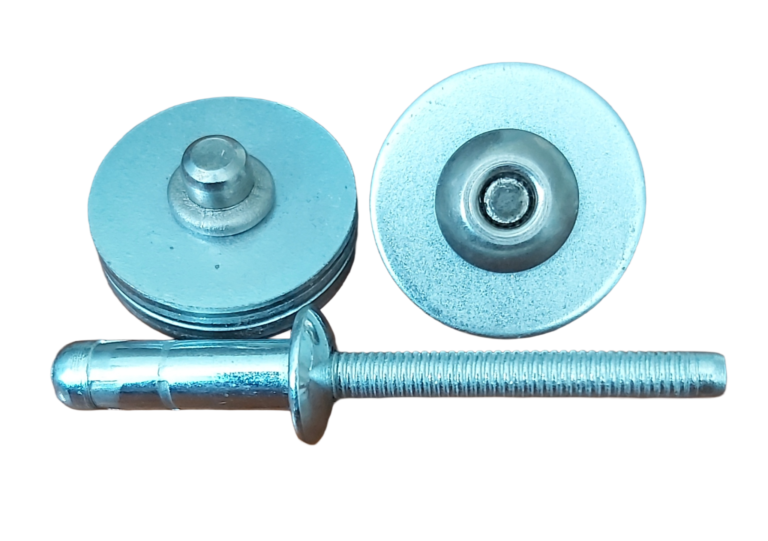
In many industrial applications, a standard blind rivet simply isn’t strong enough. When a joint is subjected to heavy loads, vibration, impact or fatigue, a structural blind rivet provides a much stronger and more reliable fastening solution.
Top Fasteners’ Duo-Lock Structural Blind Rivets are designed for demanding applications where high shear strength, high tensile strength and secure mandrel retention are essential.
They are a direct equivalent to Hemlok™ and Orlock™ structural blind rivets, making them an excellent alternative for manufacturers and maintenance teams looking for proven structural performance.
What Is a Structural Blind Rivet?
Unlike a conventional blind rivet, a structural blind rivet is specifically engineered to carry higher loads and withstand harsh operating conditions.
Duo-Lock rivets feature:
✔ Mechanical mandrel locking
✔ High clamp force
✔ Excellent vibration resistance
✔ High shear and tensile strength
✔ Secure, permanent installation
These features make them suitable for structural applications where safety and durability are critical.
When Should You Use Duo-Lock Structural Blind Rivets?
1. Heavy-Duty Assemblies
Whenever the joint carries significant loads, structural blind rivets are often the preferred solution.
Typical applications include:
✔ Truck body manufacturing
✔ Trailer construction
✔ Bus body assembly
✔ Commercial vehicle fabrication
✔ Agricultural equipment
✔ Mining machinery
These industries demand fasteners capable of maintaining joint integrity under constant loading.
2. High Vibration Environments
Vibration is one of the biggest causes of fastener failure.
Applications such as:
✔ Transport equipment
✔ Mining vehicles
✔ Construction machinery
✔ Rail equipment
✔ Industrial machinery
can loosen ordinary fasteners over time.
The mechanical mandrel locking system used in Duo-Lock rivets helps maintain joint integrity even under continuous vibration.
3. Structural Steel and Aluminium Fabrication
Structural blind rivets are ideal where welding is undesirable or impractical.
Benefits include:
✔ No heat distortion
✔ No repainting after installation
✔ Faster assembly
✔ Access required from only one side
This makes them suitable for joining:
✔ Steel sections
✔ Aluminium extrusions
✔ Sheet metal panels
✔ Structural frames
4. Blind Installation
Many assemblies only allow access from one side.
Examples include:
✔ Closed box sections
✔ Tubular frames
✔ Vehicle pillars
✔ Enclosures
✔ Machine frames
Duo-Lock structural blind rivets provide structural fastening without requiring access to the rear of the joint.
Why Choose Duo-Lock Instead of Standard Blind Rivets?
Higher Shear Strength
Structural blind rivets are designed to withstand significantly greater shear loads than conventional blind rivets.
This is particularly important where loads act across the joint.
Higher Tensile Strength
Where joints are subjected to pulling forces, Duo-Lock rivets provide much greater resistance to failure.
Positive Mandrel Locking
Unlike ordinary blind rivets, the mandrel is mechanically retained within the rivet body.
Benefits include:
✔ Increased strength
✔ Improved vibration resistance
✔ Reduced risk of mandrel movement
✔ Improved long-term reliability
Improved Fatigue Performance
Repeated loading can eventually loosen or weaken conventional fasteners.
Structural blind rivets are specifically designed for applications involving:
✔ Dynamic loading
✔ Continuous vibration
✔ Shock loading
✔ Fatigue stresses
Permanent Structural Joint
Duo-Lock rivets produce a secure permanent joint suitable for demanding industrial applications.
Duo-Lock vs Standard Blind Rivets
| Feature | Duo-Lock Structural Rivets | Standard Blind Rivets |
|---|---|---|
| Shear Strength | Excellent | Moderate |
| Tensile Strength | Excellent | Moderate |
| Vibration Resistance | Excellent | Good |
| Mechanical Mandrel Lock | Yes | Usually No |
| Structural Applications | Excellent | Limited |
| Heavy-Duty Equipment | Excellent | Limited |
| Blind Installation | Yes | Yes |
Direct Equivalent to Hemlok™ and Orlock™
Many manufacturers specify Hemlok™ or Orlock™ structural blind rivets because of their excellent structural performance.
Top Fasteners’ Duo-Lock Structural Blind Rivets provide a direct equivalent fastening solution, offering comparable installation characteristics and structural performance for many applications.
If your engineering specification allows equivalent structural rivets, Duo-Lock can provide a reliable and cost-effective alternative.
Always confirm that the selected rivet meets your engineering, load and specification requirements before substituting products.
Industries That Benefit from Duo-Lock Structural Rivets
Duo-Lock rivets are widely used in:
✔ Truck and trailer manufacturing
✔ Bus body construction
✔ Mining equipment
✔ Agricultural machinery
✔ Railway equipment
✔ Construction machinery
✔ Heavy transport
✔ Industrial fabrication
✔ Sheet metal engineering
Choosing the Right Structural Rivet
When selecting a structural blind rivet, consider:
✔ Material type
✔ Material thickness
✔ Required shear load
✔ Required tensile load
✔ Corrosion resistance
✔ Head style
✔ Rivet diameter
Choosing the correct rivet ensures maximum joint strength and long service life.
Conclusion
When applications demand greater strength, higher vibration resistance and long-term durability, Duo-Lock Structural Blind Rivets offer significant advantages over standard blind rivets.
With high structural performance, positive mandrel retention and blind installation, Duo-Lock rivets are ideal for heavy-duty manufacturing, transport, mining and industrial applications.
As a direct equivalent to Hemlok™ and Orlock™ structural blind rivets, Duo-Lock provides manufacturers with a dependable fastening solution for demanding structural assemblies.
If you’re unsure which structural blind rivet best suits your application, contact the fastening specialists at Top Fasteners for expert advice.